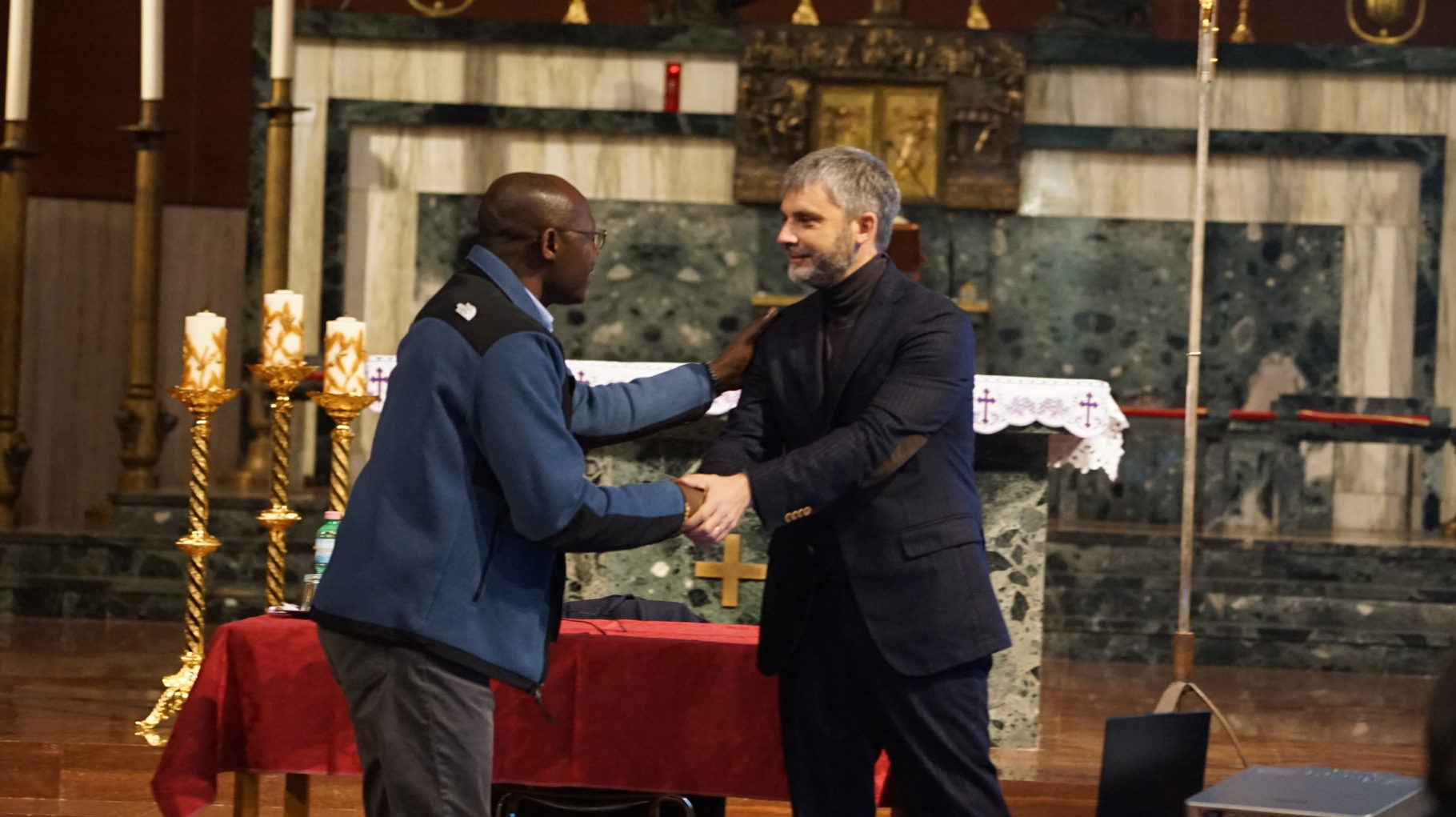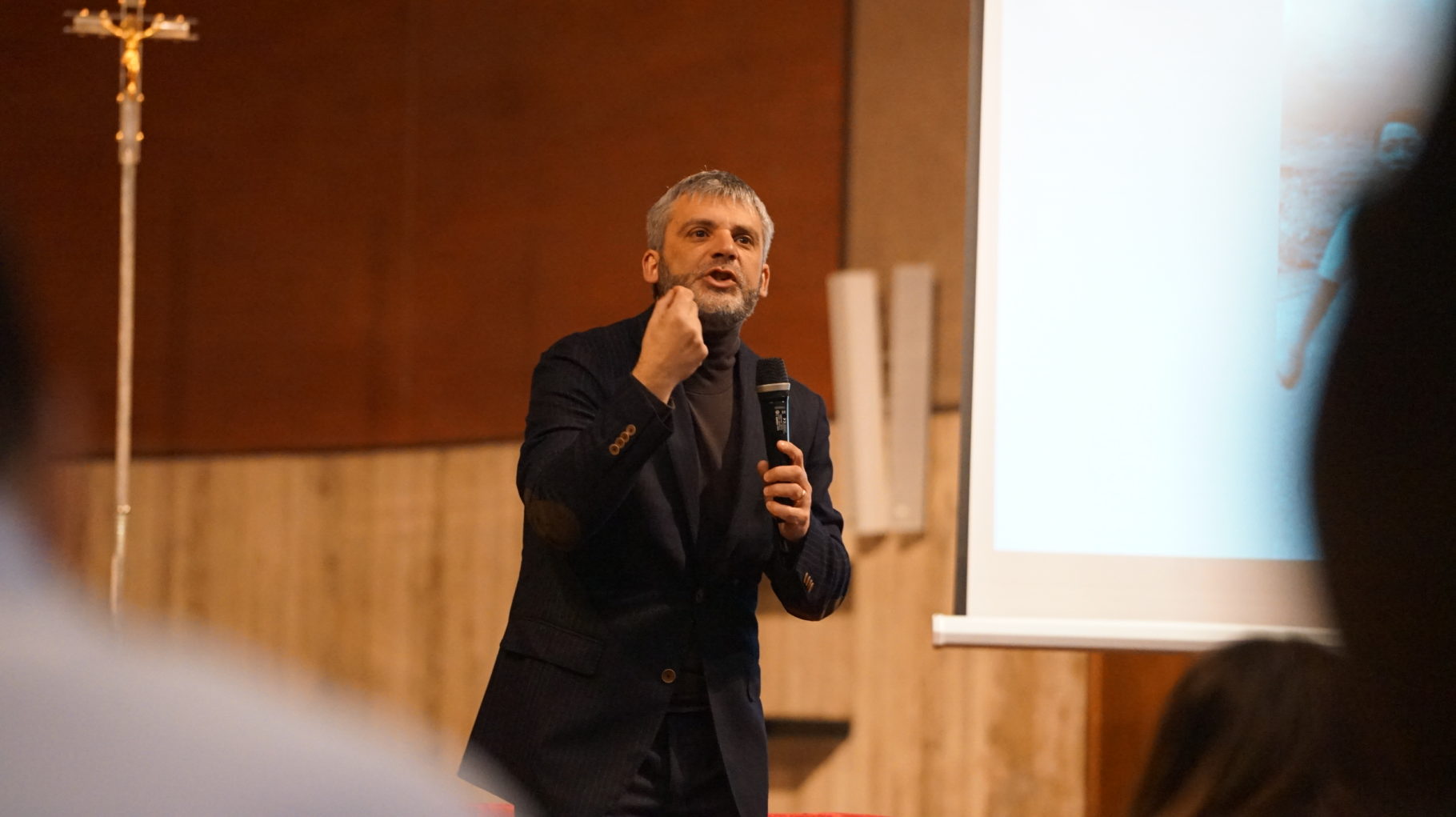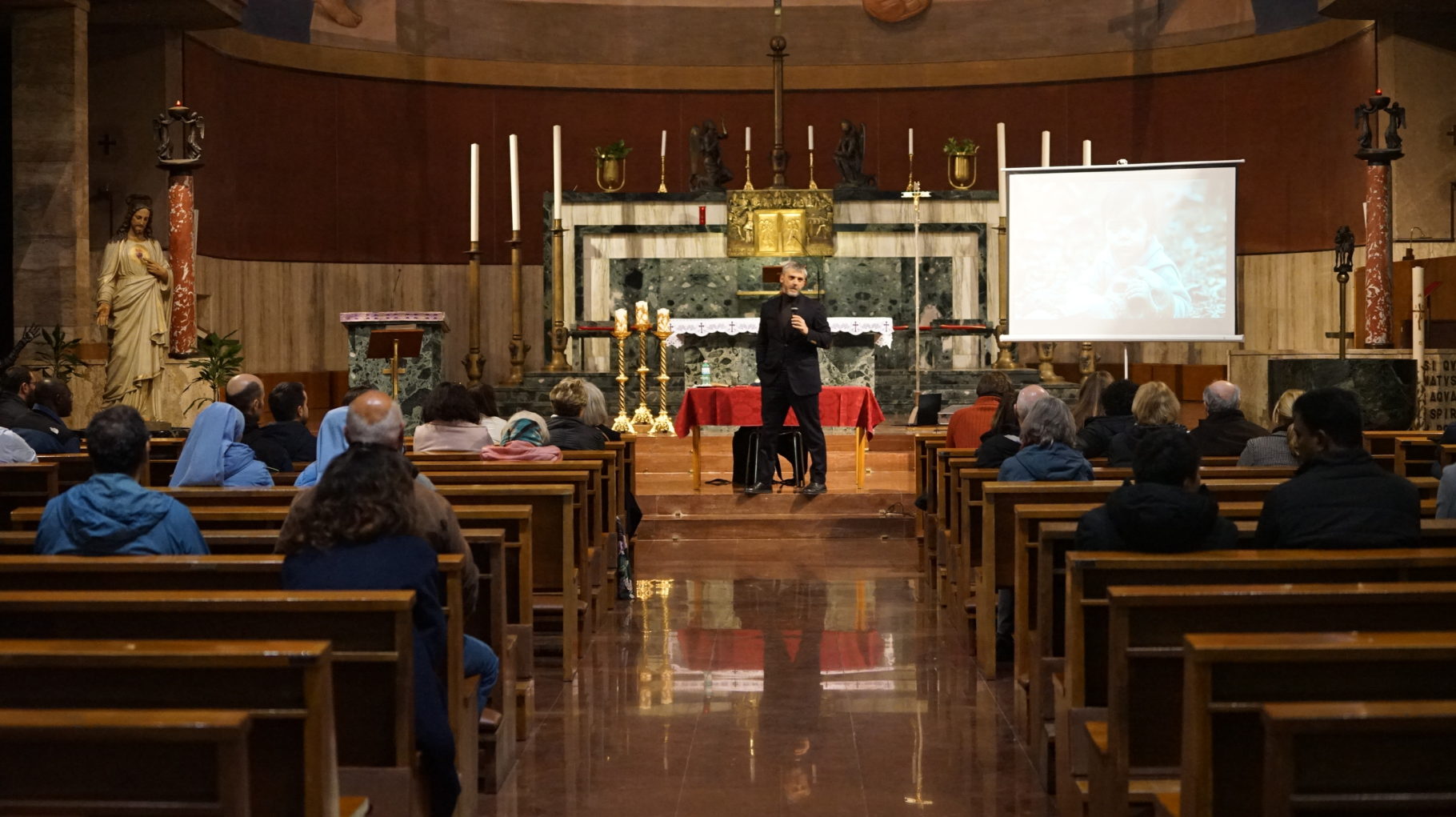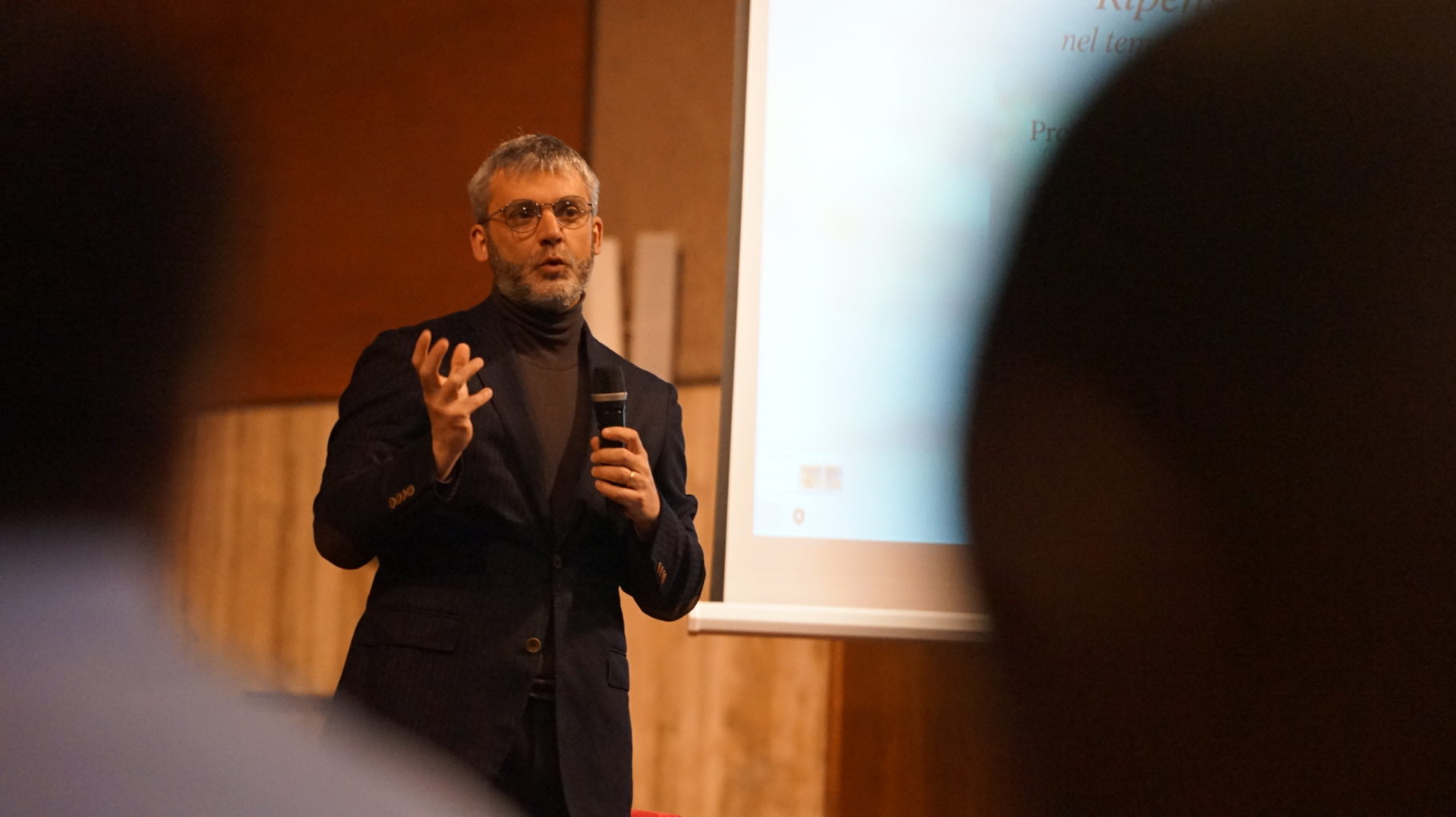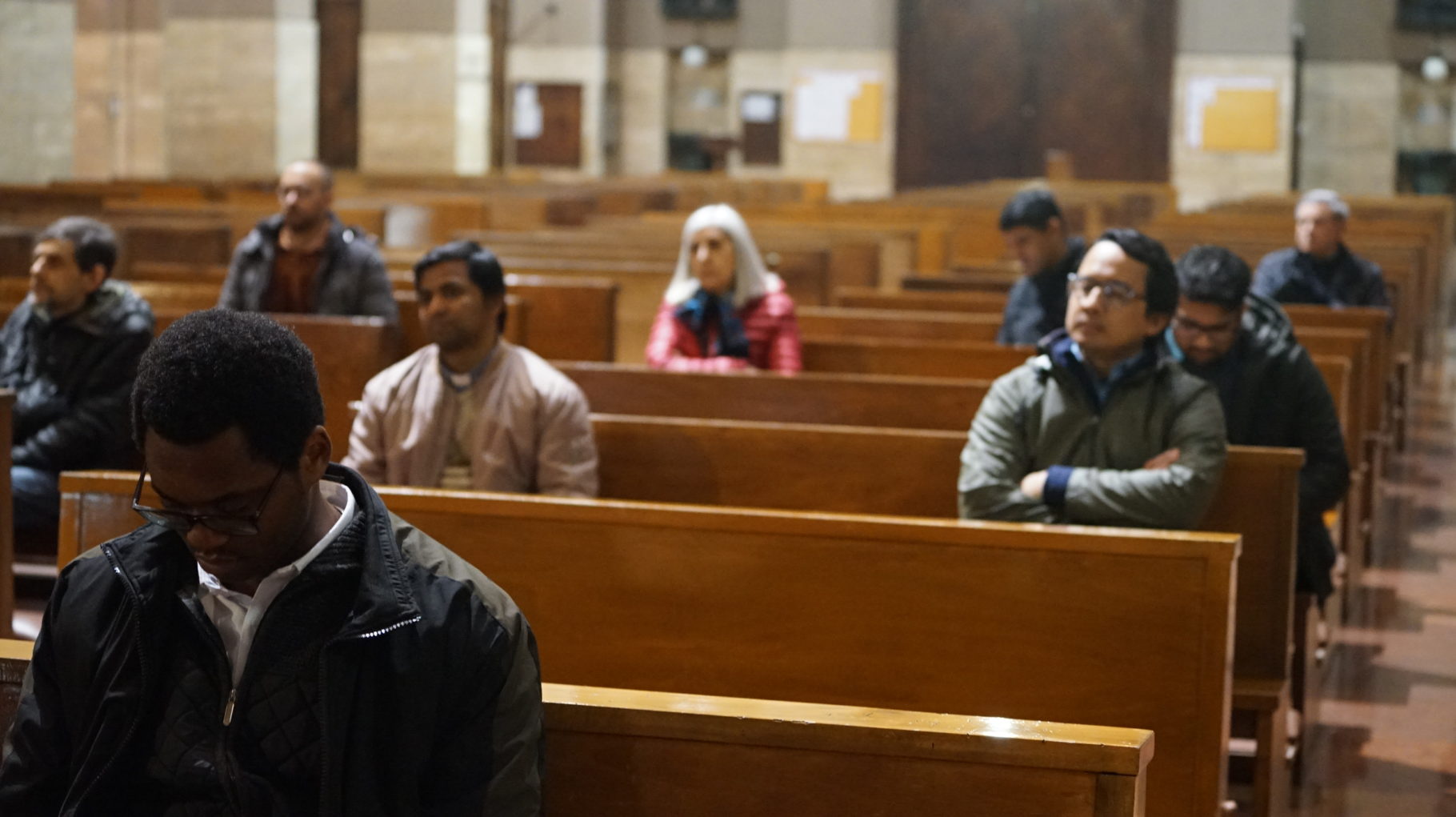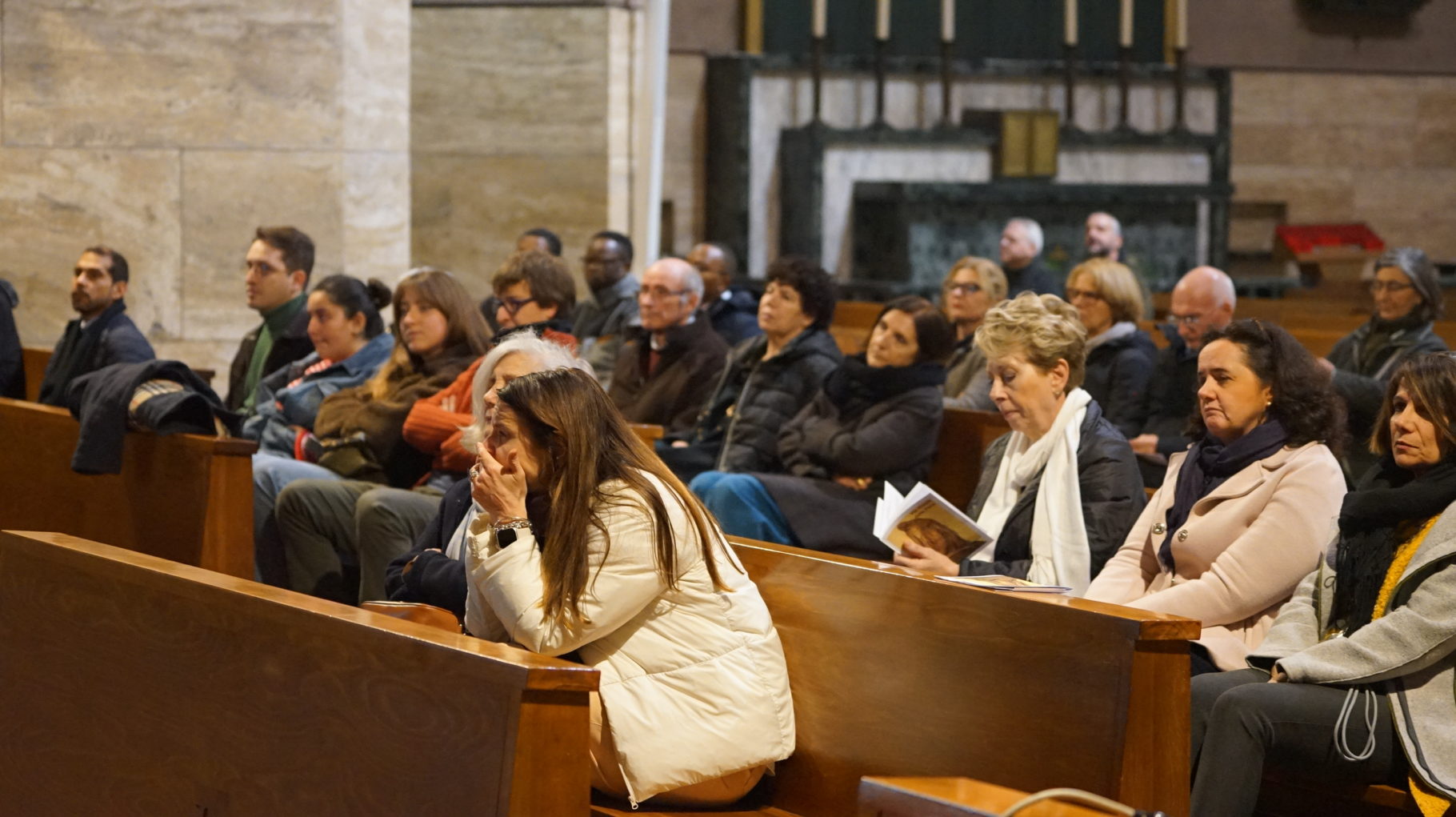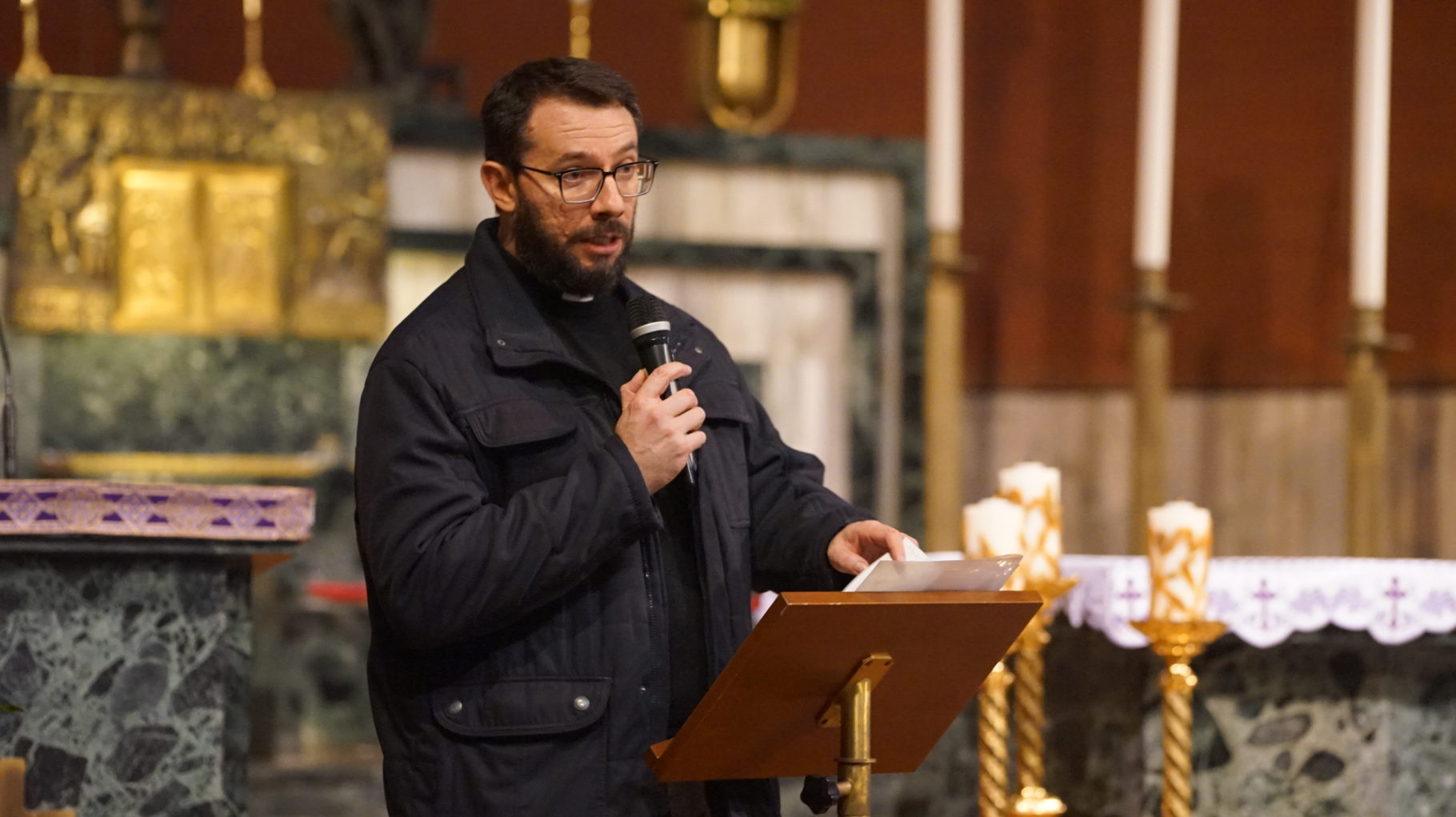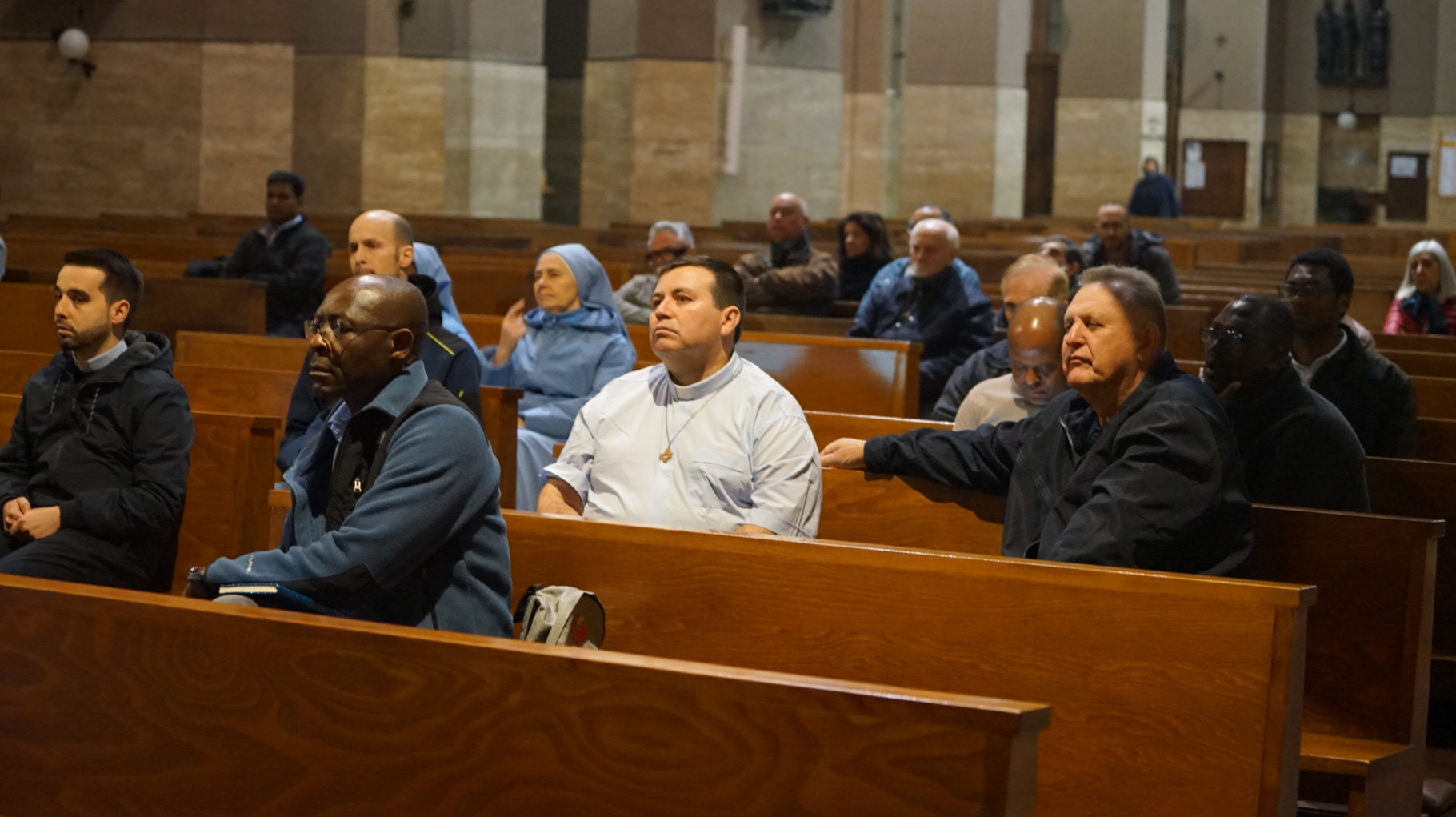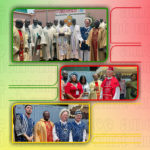
On March 6, 2026, the communities of the General House of the Priests of the Sacred Heart of Jesus and the Dehonian parish community of Christ the King in Rome had the opportunity to experience a day of deep reflection on the theme of Peace, in a world that seems dominated by the power of war.


On March 6, 2026, the communities of the General House of the Priests of the Sacred Heart of Jesus and the Dehonian parish community of Christ the King in Rome had the opportunity to experience a day of deep reflection and intellectual and pastoral updating on the theme of Peace.
We gathered to listen to Professor Massimiliano Padula, from the Pontifical Lateran University, who challenged us to “Rethink peace in the age of hyper-complexities.” From the beginning, Professor Padula proposed his reflection as an opportunity for conversion and the renewal of our perceptions. Far from a traditional masterclass, the meeting was an interactive experience using technology—an unavoidable characteristic of our time. Here are some of the most striking ideas from this encounter:
Conflict as a dimension of existence
One of the most provocative points of the talk was the deconstruction of the notion of conflict, which generally carries a purely negative connotation. Conflict is a constitutive dimension of social power and our own identity; we have all, at some point, experienced conflict in our families or communities. The key is not to eliminate it—an attempt doomed to fail by rationalist bureaucracy—but to understand it and negotiate with it within the complexity of our current society. While a “complicated” problem seeks a solution, a “complex question” demands to be understood and inhabited. Conflict has the potential to break initial equilibriums to establish new ones. Therefore, it is not a matter of seeking its elimination, but of managing its escalation to avoid mutual destruction and to allow for conversion and the changing of relationships.
War in the age of digital hyper-stimulation
Through a visual journey of iconic images—from the napalm girl in Vietnam to the child Aylan Kurdi on the Turkish coast—it was shown how hyper-stimulation by images can lead us to desensitization. Today, institutional mediation of information has given way to what is called “socialized” and subjectivized war. For example, we now see war through drones and head-mounted cameras, almost like a video game, which profoundly alters our perception of others’ pain, desensitizing our view of the world, of others, and of suffering.
On the other hand, the emergence of artificial intelligence and the proliferation of fake news have made it difficult to distinguish between the real and the fictitious. In this context, war is also fought on the level of meanings and the manipulation of the collective imaginary, placing us before a true crisis of the symbolic universe.
Towards a “Positive Peace” and cultural peace
But it is necessary to take a step forward: we must move beyond the notion of “negative peace,” understood as the simple absence of war, to aspire to a “positive peace”—a term coined by Norwegian sociologist Johan Galtung—which implies going far beyond the void of violence.
In this time of “non-peace” or unpeace, where the connectivity that unites us is the same used as a weapon to exert structural violence in trade, finance, and the internet, it seems that diplomatic treaties, often used as “verbal palliatives,” are not enough. Building a lasting peace requires a “cultural peace,” which involves the internalization of a peace consciousness based on the recognition of the other and the rejection of their dehumanization. As Christians, parents, educators, and global citizens, we have the great challenge of making this cultural peace visible and concrete through peaceful means and the active construction of peace.
“Peace is not a gift. Peace is an achievement…”
We concluded with this thought from Maria Montessori that resonated in our hearts:
“Peace is not a gift. Peace is an achievement. It is not the absence of war, but the presence of justice, love, and harmony between human beings. It cannot be achieved simply by political treaties or diplomatic agreements; these are only temporary palliatives. True peace must be built and take root in the soul of man from childhood.”
This meeting of reflection on the question of peace left in our hearts the conviction that rethinking peace in this complex time is not only an intellectual task but an urgent mission to humanize our relationships in a world increasingly fragmented but, paradoxically, more connected than ever and endowed with far more possibilities to build than to destroy.