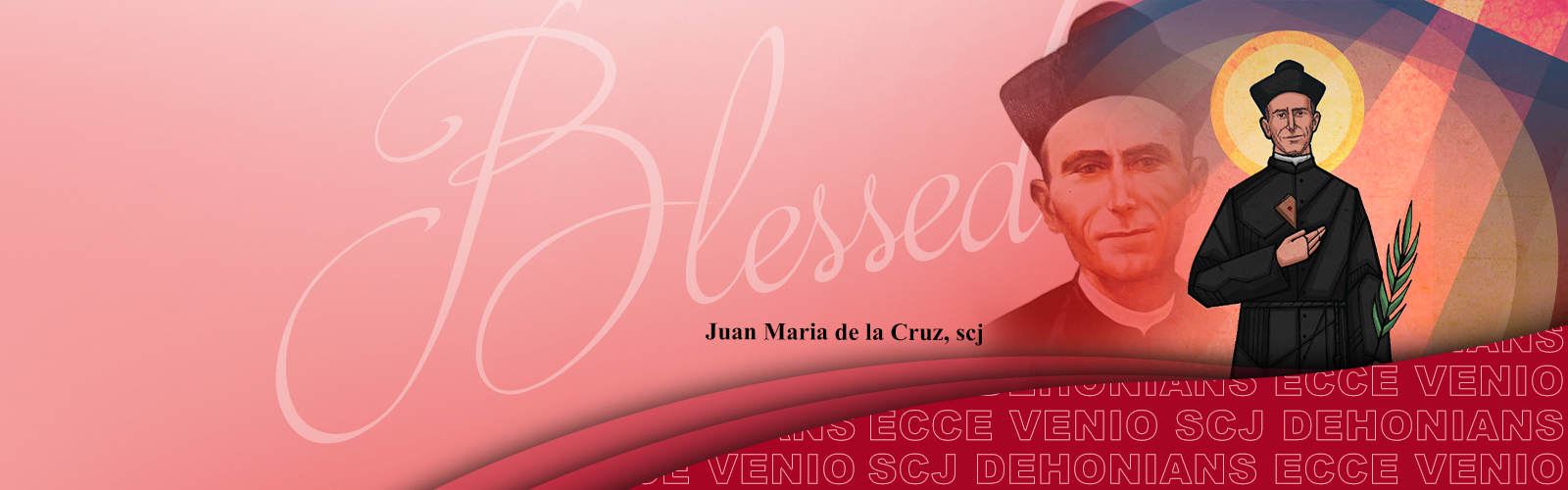


Reverend Father, Fr. John Mary of the Cross, a Dehonian religious from the Spanish Province, was martyred on the evening of August 23, 1936, in Valencia and was beatified on March 11, 2001, by Pope John Paul II. What can we draw today from his spiritual legacy, 25 years after his beatification?
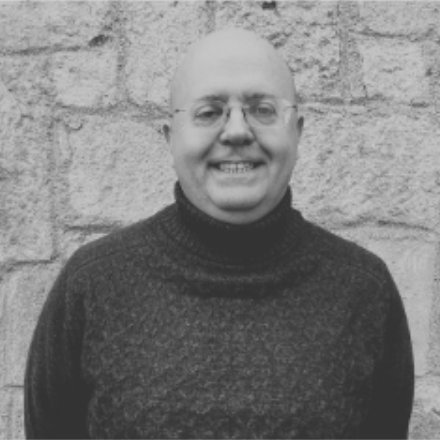 Fr. Juan José Arnaiz Ecker, SCJ: A first step was to move away from the “political noise” that martyrdom situations inevitably bring with them. Thus, during these years, we have been able to discover his religious and spiritual figure, his inner and vocational struggle, his search for God’s will in obedience and in the contradiction of his own tastes, and finally the witness capacity of our blessed confrere—whom I always want to remind everyone is a blessed of the Congregation, and not just of the Spanish Province.
Why is the Spanish Province celebrating the jubilee of this Blessed of the Congregation exactly one month after the official date of the beatification?
Lent is not an appropriate time for large celebrations! It was simply a matter of scheduling. There were no other reasons.
What resonance does the figure of Father John Mary of the Cross, the first Dehonian Blessed, have today within the SCJ Province of Spain?
Blessed John Mary died at an age we might consider “young” today. Moreover, if he was young, our entity was even younger at the time. Certainly, he could have become one of the pillars of the institutional beginnings of our Province, but he became an unexpected, strictly spiritual pillar. This is how he entered the daily life of our community and apostolic life. He accompanies us in many cases during the recitation of the Eucharistic prayer, being invoked alongside the saints of the day. In our schools, his liturgical memory in September has allowed him to become the first Dehonian reference of the school and pastoral year. The same applies to the parish apostolate. Personally, the promotion of his specific devotion is a goal of this anniversary, as is resuming the study of his writings and deepening his biographical journey.
Beyond the Congregation, is he known in Spain?
Beyond the Congregation, in his home diocese of Ávila, we know that he has a liturgical presence which, in his native village, has become a prominent presence, giving his name to streets and municipal structures in San Esteban de los Patos (Ávila). However, we cannot forget that his presence in our church in Puente la Reina (Navarre), called El Crucifijo, at the beginning of the Camino de Santiago, gives his figure an international reach that is difficult to measure but undoubtedly real. This is why I reiterate the invitation to the entities of the Congregation to schedule pilgrimages to the tomb of the blessed and to enter into this communio sanctorum provided by our martyr confreres, to whom the venerable Martino Capelli is added. To date, between Saint-Quentin, Bologna, and Puente la Reina, a “triangle of Dehonian holiness” is formed that allows us to touch the great values of oblation, apostolic commitment, the welcoming of the Spirit, care for the community and the weakest; in short, the radical gift to the Lord of the New Heart.
What are the main initiatives or events planned by the Province to celebrate this jubilee?
We have planned these initiatives more as an anniversary than as a jubilee strictly speaking. Among the events, besides the fraternal gathering which will be joined by a large group of the blessed’s family members, his figure will be remembered in a conference entrusted to the Postulator General of the Congregation, Fr. Ramón Domínguez, and celebrated with a solemn Eucharist presided over by our Superior General, Fr. Carlos Luis Suárez. As a lasting sign, a new sculpture of the blessed will be blessed and placed for worship on that day. Finally, the General Government wished that on the occasion of this anniversary, and also in preparation for the upcoming beatification of Fr. Capelli, the meeting with Dehonian religious bishops be held precisely in Puente la Reina during the last week of April.
At the provincial level, what concrete fruit or “renewal” do you hope to see sprout at the end of this jubilee year?
This anniversary is part of the Dehonian Jubilee and, at the provincial level, we wanted this pastoral year to carry a strong charge of spiritual renewal in the search for answers (even provisional ones) to the questions that inhabit us, that move us, and that help us enter into daily communion with the Spirit. It is this Spirit that pushed Blessed John Mary of the Cross to love the Lord so much that he was not afraid to proclaim His Name aloud and to profess his faith in the God-love that the Lord Jesus revealed to us: an oblative and apostolic gift, though humble and hidden.