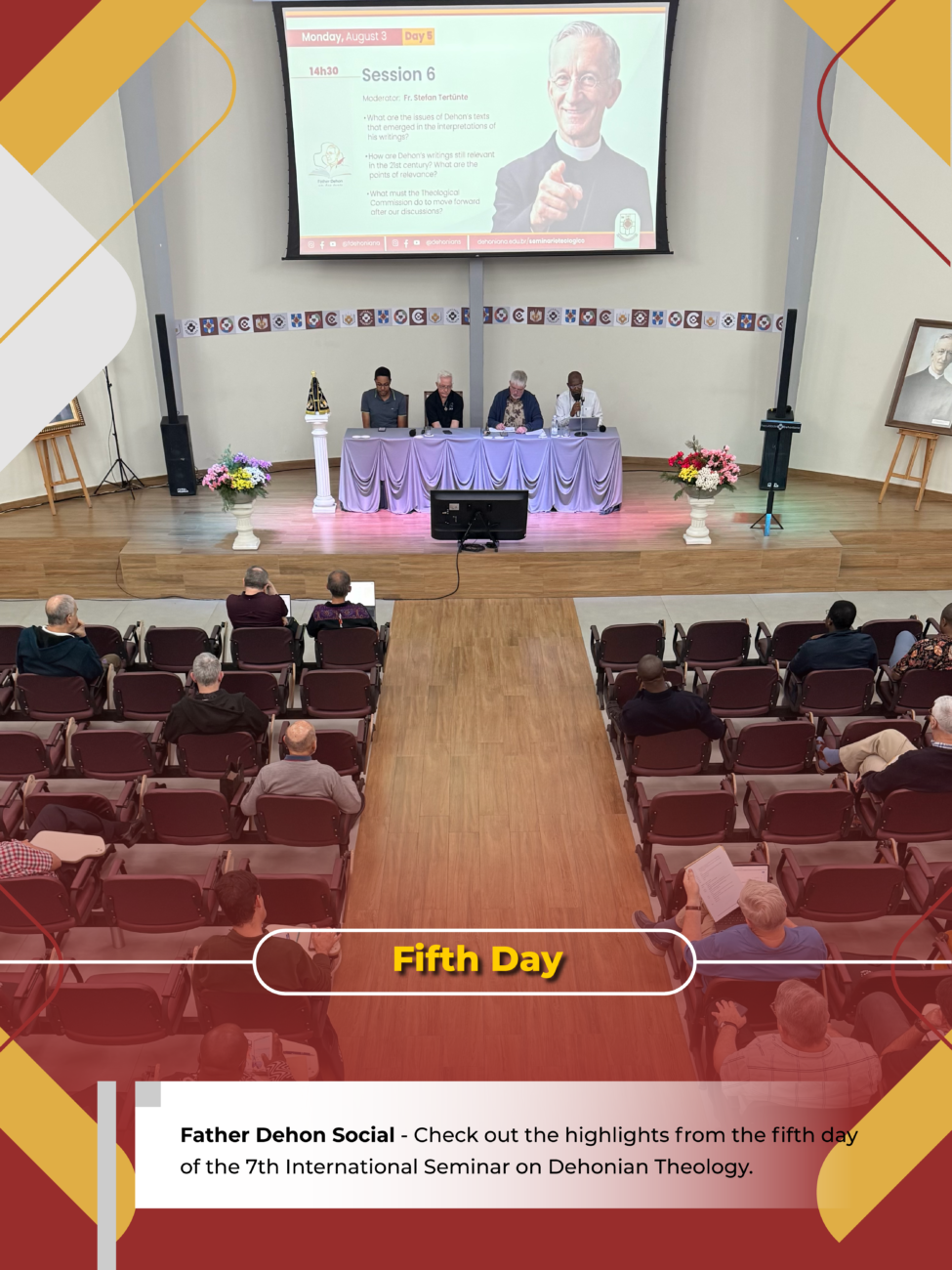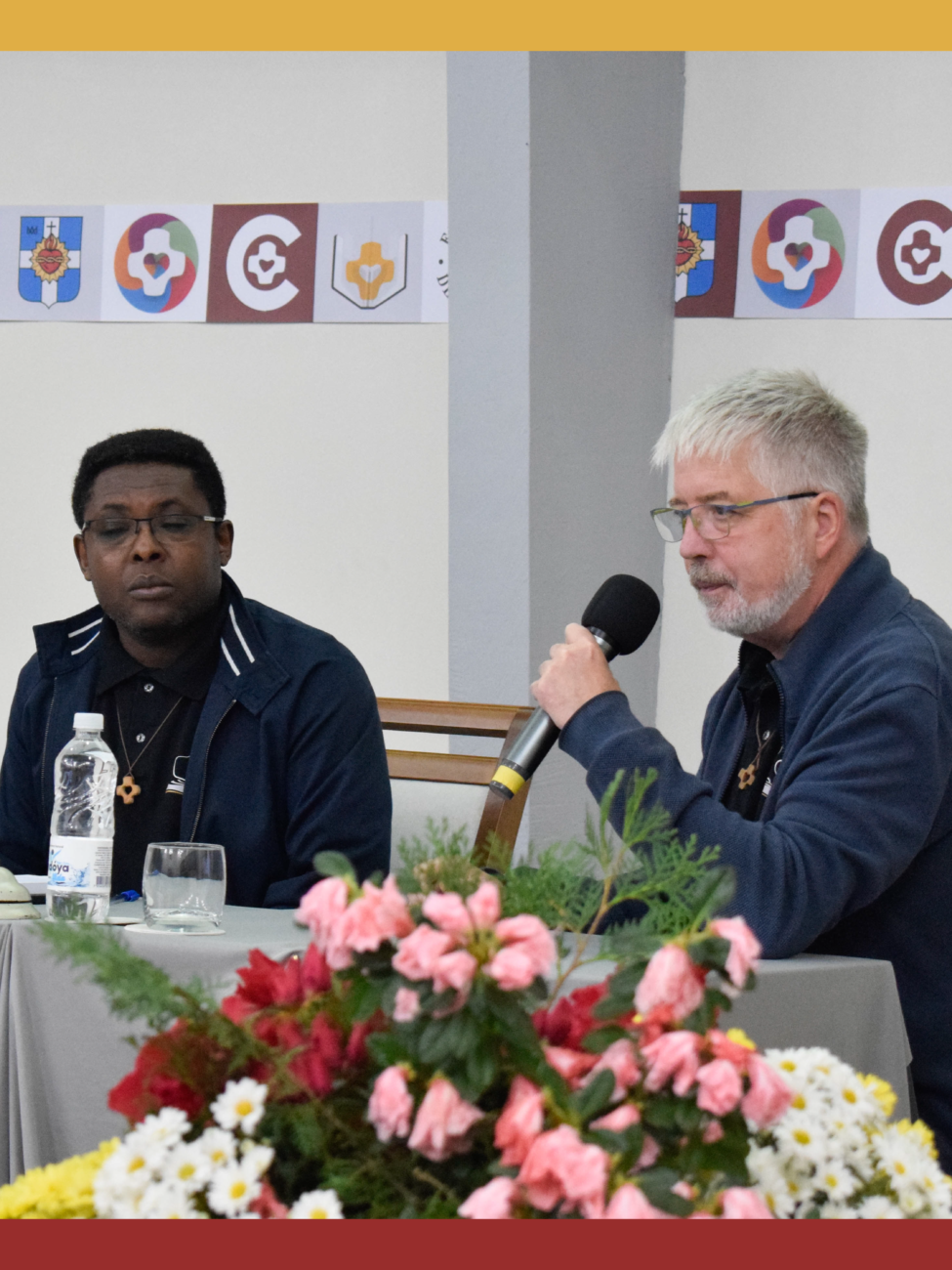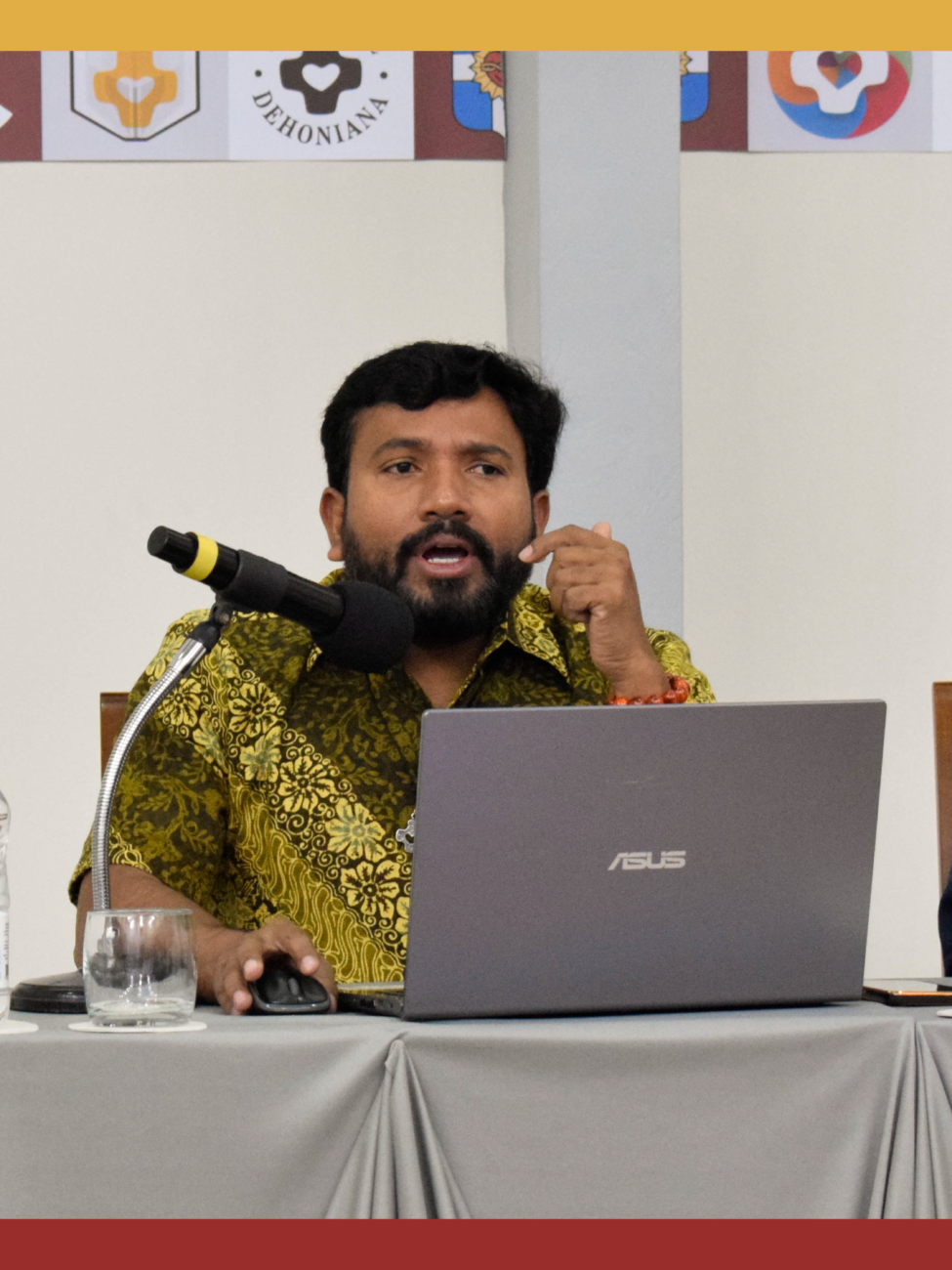


The fifth session of the Seminar was dedicated to the study of Father Dehon’s articles published in La Chronique du Sud-Est, based on a timeframe set between 1889 and 1903. The Asian Theological Commission (CTDAS) presented this corpus as a gateway to understanding the period known as Father Dehon’s “social years”, in which his spiritual experience, his commitment to the social question, and his publicist activity are articulated.
The presentation placed the texts in the context of Dehon’s intense social activity, marked by the foundation of Le Règne du Sacré-Cœur de Jésus dans les Âmes et les Sociétés, by the reception of Rerum Novarum, by social congresses, and by his participation in debates on Christian democracy, the condition of the working class, socialism, laicization, and the Catholic press. The study sought to show that, for Dehon, devotion to the Heart of Jesus is not reduced to the private sphere: the Reign of the Heart must also reach societies, becoming a principle of justice, charity, and the transformation of social relations.
By applying the categories of implicit author and implicit reader, the CTDAS presented Dehon as an author who is simultaneously ecclesial, historical, prophetic, catechetical, and practical. He seeks to interpret social reality in the light of the Church’s Magisterium and to translate it into concrete guidelines for Catholics. His reader is progressively summoned to leave passivity behind, to understand the social question, to organize, and to participate in public life. The commission acknowledged, however, the presence of language and positions conditioned by his time, notably regarding Jews, Freemasonry, and other religions, and defended a historical and critical reading capable of discernment.
The Latin American Theological Commission (CTDAL), in its response, recognized the historical and thematic richness of the study, but proposed greater rigor in the application of the Seminar’s methodology. It highlighted in particular the necessity of distinguishing Le Règne, a periodical directed by Dehon, from La Chronique du Sud-Est, in which he was a collaborator. This editorial difference modifies the author’s position and makes it possible to understand Dehon as a mediator between Rome, the Church, and French society: he does not merely transmit pontifical thought, but seeks to translate it into the concrete political and social circumstances of France.
The working groups explored this perspective in greater depth. There was convergence in the perception that spirituality and social commitment are inseparable in Dehon. His method can be synthesized in the movement of seeing, judging, and acting: getting to know reality concretely, illuminating it through the Gospel and the Magisterium, and seeking organized responses. His openness to dialogue, his attention to the experiences of other countries, and his capacity to enter into social debate without abandoning the centrality of the Heart of Jesus were also highlighted. At the same time, the groups insisted that the contemporary reception of Dehon demands critical fidelity: his fundamental intuitions—human dignity, justice, attention to workers and the poor—must be preserved without literally reproducing categories or positions that are historically conditioned.
The plenary session focused above all on the evolution of Dehon’s social and political commitment. It was concluded that it is inadequate to affirm that his social apostolate ended with the death of Leo XIII. From 1903 onward, his action changed form due to exile, the international expansion of the Congregation, new governance responsibilities, and his service to the Church as a consultor. His collaboration with La Chronique shows that social concern remained present, albeit inserted into new circumstances.
The session thus made it possible to understand La Chronique du Sud-Est not only as a source for knowing Father Dehon’s social ideas, but as a privileged space for perceiving his evolution as an author, his capacity for mediation between Rome and French society, and the transition from a spirituality of the Heart of Jesus to a concrete presence in the world. The main conclusion was that, in order to understand Dehon, one cannot separate his mysticism from his social action, nor his spiritual thought from his reading of history. The question that remains for the Dehonian Family is how to receive this heritage today, critically discerning its limits and translating its fundamental intuition: the love of the Heart of Christ engaged for justice and human dignity, in the face of new forms of poverty, exclusion, and social transformation.