Religious Life Founded on Grace and on the Church’s Depositum Fidei (Cst. 15)
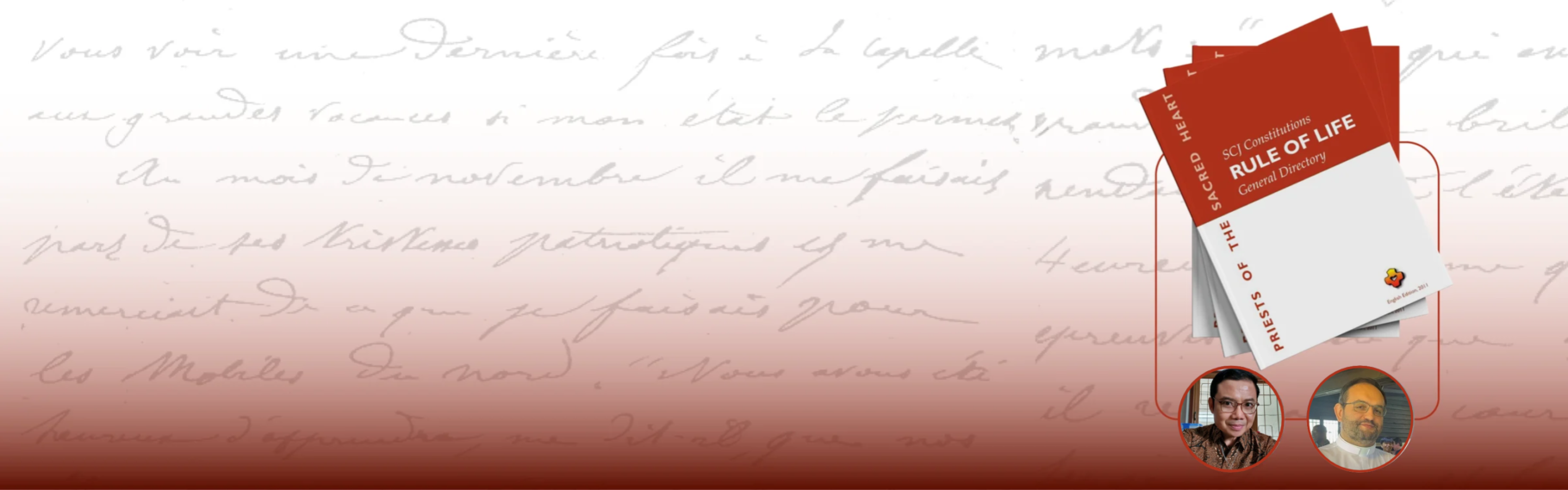


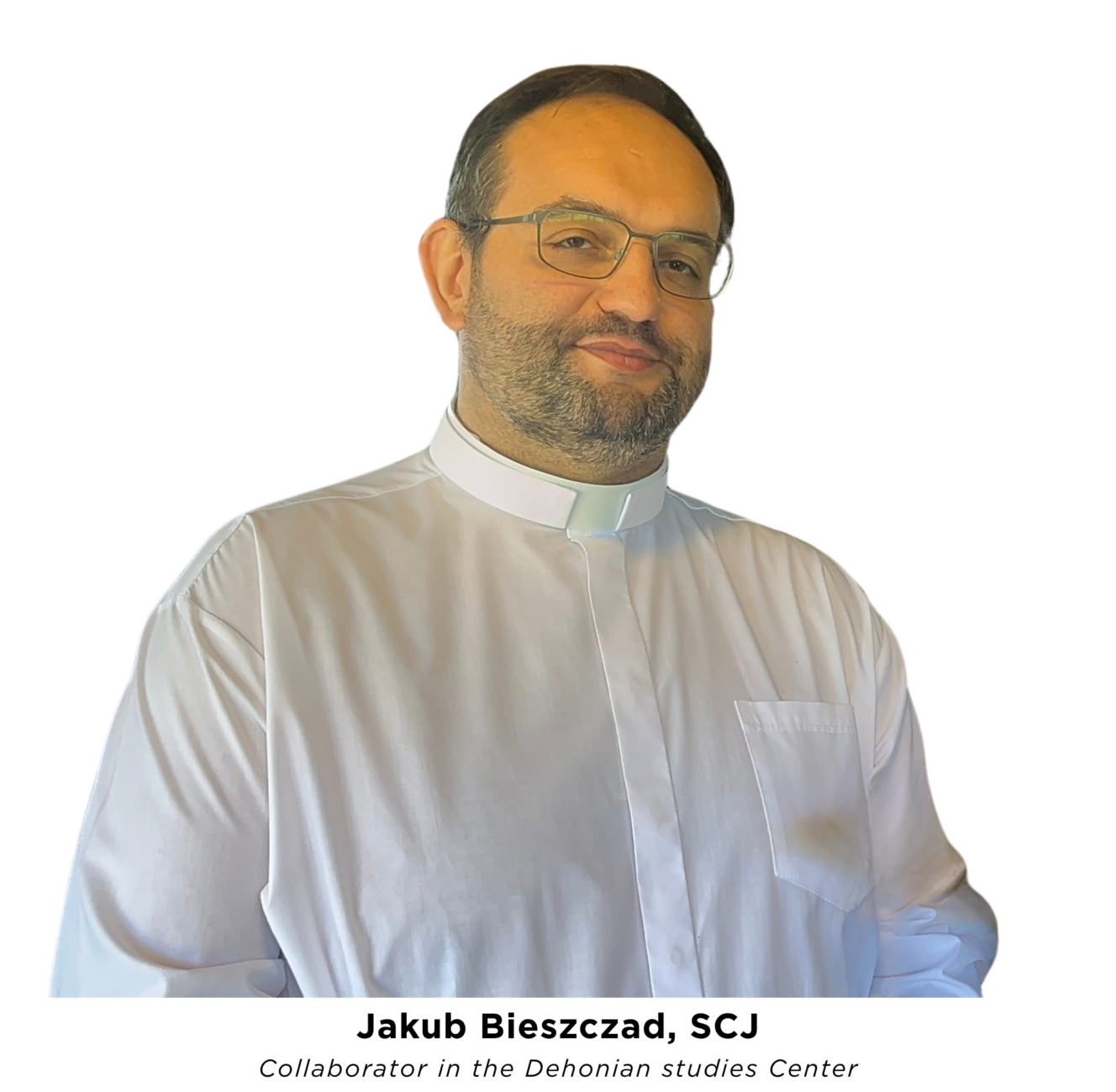
The Superior General’s Introductory Letter for the Dehonian Jubilee (2024–2028) emphasizes that the spiritual heart of our celebration rests upon reflection on Constitutions Nos. 9–39. We are pleased to share the seventh reflection and testimony, centered on Constitution No. 15, offered by Father Jakub Bieszczad of the Center for Dehonian Studies and Father Petrus Sugiarto, Rector of the Dehonian Scholasticate in Indonesia.
Religious Life Founded on Grace and on the Church’s Depositum Fidei (Cst. 15)
For each of us, for our communities, religious life is a history: beginning from the grace of our origins, it develops by drawing nourishment from what the Church, enlightened by the Spirit, continually draws from the treasury of her faith.
 This section of the Constitutions concludes by presenting a Dehonian as a witness of the Kingdom that manifests itself in the Church and which, as Fr. G. Manzoni wrote, constitutes a small Church within the universal one. In this final act of this first Christological treatise (Nos. 9–15), the text offers a theology of history that invites every Dehonian to contribute actively to what the mission of Christ is transforming in the world. The Dehonian, through his dedication and compassion,is not merely a guardian of memory, but also an architect of the future kingdom of justice, which transcends the justice of the present time. He becomes the true demiurge, drawing from the tradition of his own spirituality and thus succeeding in reviving the spirit that animated the founder and his first followers in building the charism.
The number of the General Directory accompanying this point takes to heart a truly fundamental aspect: fidelity. It is our way of honoring and continuing the work of Dehon, making his experience contemporary and carrying forward his values. Our spirituality is not a mere repetition of that of the Founder, nor is it a simple imitation of his way of acting and praying. Spirituality means being part of the ecclesial tradition where I am seen as a “mediator of the one Mediator,” and where my oblation reflects that of the Incarnate Word. My life becomes the space in which Christ reveals Himself to the people to whom I am sent and repeats all the miracles of His love so that this may be possible through me. Thus, history becomes an expression of divine interventions in the life of the human family, which cannot exist without the grace of God. My vocation becomes part of this experience and remains truly beneficial only if it helps brothers and sisters encounter the God of love.
Furthermore, another important aspect must be highlighted: the recognition of the value of history as the foundation of spirituality, which is manifested in the 150th year of the Congregation’s life. History can be present in two ways: through the narrative that seeks to depict all the divine interventions in the life of our institute, or through the spiritual rite that creates the conviction that the same thing has been repeated unchanged from the very beginning. Living the memory of our origins is not merely studying history, but also celebrating tradition. When we reject the marks of the past, we risk forgetting a part of ourselves. It is evident that Christ Himself appreciated the wise “scribe” who, like a good “pater familias,” brings forth from the storeroom of his heart things both new and old. In other words, while there may be things worth leaving behind, number 15 of the Rule of Life urges prudence regarding history. Change may be an easy path to take, but one often ends up forgetting things that seem non-essential for our daily life. Nevertheless, these very things can be crucial for understanding fully who we are and where we come from. To remember without understanding is not far from forgetting.
P. Jakub Bieszczad, SCJ
My Experience as a Formator at the Scholasticate in Indonesia
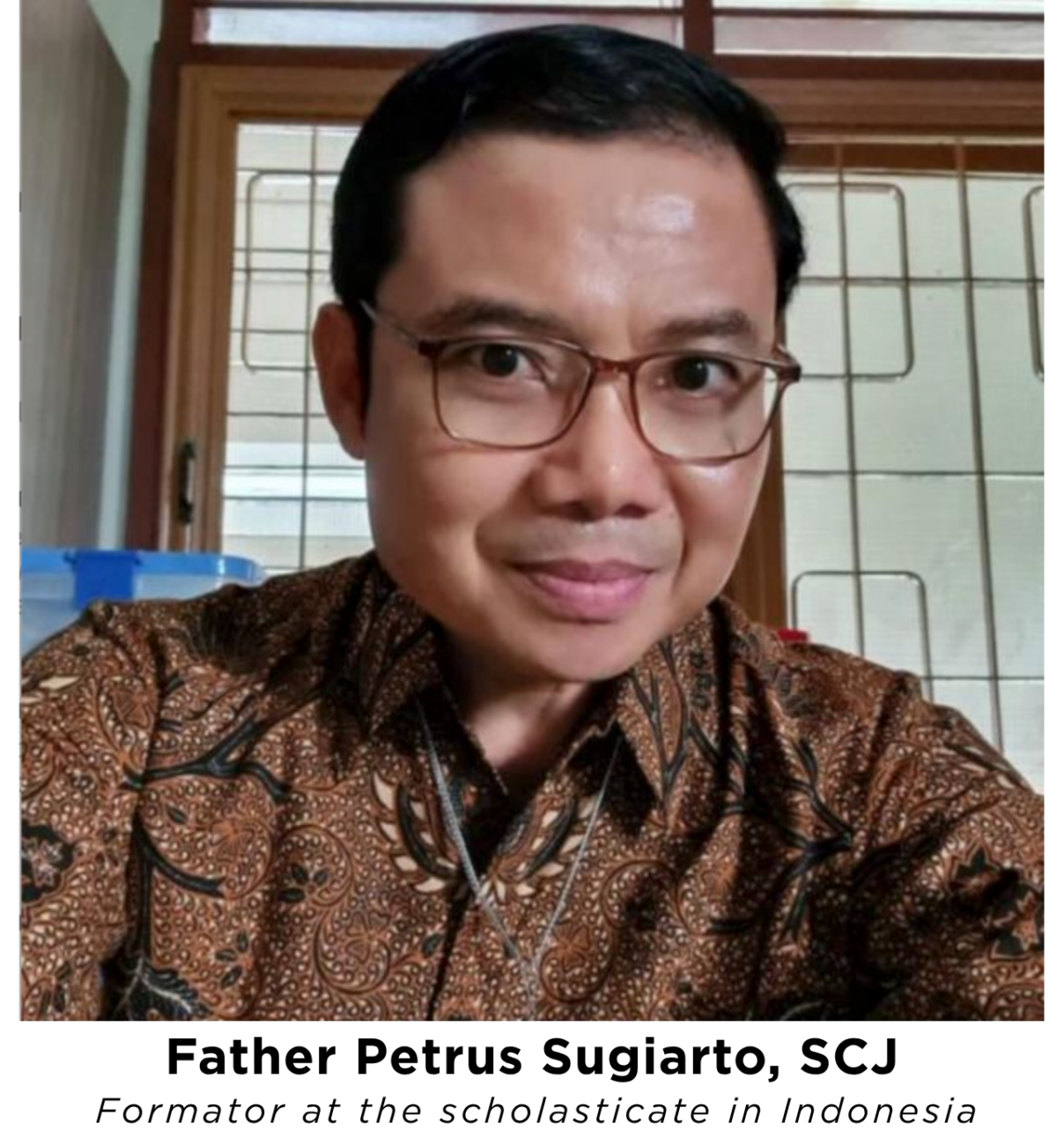 A personal testimony from Fr. Petrus Sugiarto, SCJ, Rector of the Dehonian Scholasticate in Indonesia.
My experience as Rector has increasingly convinced me that religious formation is, above all, a work of God’s grace. I have accompanied a confrere who seemed to have very limited abilities, yet gradually developed remarkably well and eventually became a good priest who continues to grow. This experience reminds me that a person’s initial limitations do not determine the final outcome of his vocation. God works patiently, often beyond our expectations, through time,accompaniment, and the faithful cooperation of the person himself.
At the same time, formation today presents significant challenges. I encounter difficulties related to perseverance, patience with the formative process, and the tendency to prioritize results over the gradual growth that authentic formation requires. Accompanying the younger generation also calls for a deeper understanding of their experiences and aspirations.The struggle for honesty in the formative process is another concern, because genuine growth requires the courage to acknowledge one’s limitations and to live truthfully before God and others.
These experiences have strengthened my conviction that intellectual formation must always be balanced by a solid spiritual life. Knowledge and academic achievement are essential, but they cannot replace a living relationship with God.Prayer, the Eucharist, the Word of God, and fidelity to the faith entrusted to the Church must remain at the heart of formation. The depositum fidei is not merely a body of doctrines to be learned; it is the faith of the Church that must be received, lived, and embodied in daily life.
I have witnessed how a confrere can flourish when he feels appreciated and is given space to develop his authentic gifts and passions. Yet I have also experienced the painful reality of a confrere who appeared firm in his vocation but later experienced a loss of vocational conviction and decided to leave. These contrasting experiences remind me that formation cannot guarantee a predetermined outcome. Each person must freely participate in his own journey of discernment and growth.
In fulfilling this ministry, I draw strength from the Dehonian spirit of Ecce venio and Adveniat Regnum Tuum. They invite me to remain available, faithful to my mission, and trusting in Divine Providence. I understand my role as a formator not as that of someone who creates vocations, but as an instrument in God’s hands, helping each confrere discover and develop the best of himself in responding to God’s call. Ultimately, each person must take responsibility for his own formation, while the grace of God remains its deepest foundation. My task is to accompany this process with faith,patience, and hope, trusting that God continues to work in each person and through the Church.
P. Petrus Sugiarto, SCJ