As part of the Dehonian Jubilee (2024–2028), we are pleased to share the sixth reflection and testimony, centered on Constitution no. 14.


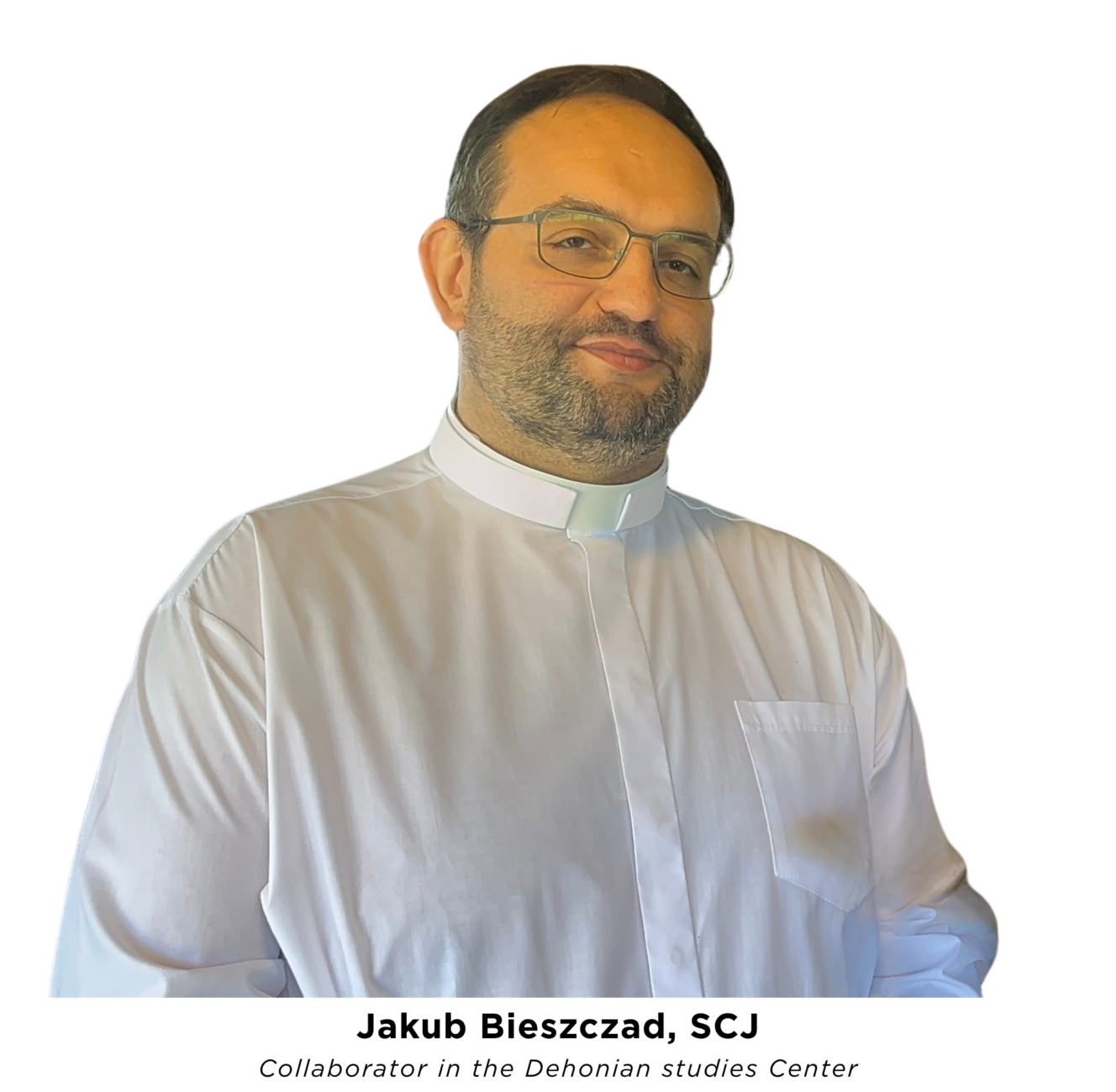
The Superior General’s Introductory Letter for the Dehonian Jubilee (2024–2028) highlights that our celebration’s spiritual core rests on reflection upon Constitutions nn. 9–39. We are pleased to share the sixth reflection and testimony, centered on Constitution no. 14, by Fr. Jakub Bieszczad, Collaborator of the Dehonian Studies Center, and Fr. Renzo Busana, SCJ, Missionary in the DR Congo for 20 years.
Total and Joyful Adhesion to Christ (Cst. 14) – Reflection
 The formula of our religious profession concludes with the expression that our Dehonian life, consecrated to God in community, aims to reach perfect charity. This love is not merely an invitation to do more for the praise of God and the service of others. It is an effective realization of our holiness that recognizes the footprint of love as the most desired path in our spiritual journey. The way we understand, experience, and collaborate with love should be a fundamental configuration of our charism, which stems from the experience of charity that could not contain itself within His Heart until It was pierced for our salvation. Gazing upon the Pierced One invites us to delve deep into His Heart to discover how to be chaste, poor, and obedient in order to bear witness to the love of Him who loved us to the end.
Love, according to the current passage of the Constitutions, is not merely an obligation easily explained through a series of approaches, but above all a precious gift to be drawn from every day. All the more so, I cannot manifest any gesture of love without experiencing being loved by the Author of our vocation. He loved us first, as Saint John teaches us—the Apostle who rested his head on the Lord’s breast as he listened to the beating of His Heart. It is important to remember that charity is a sensitivity that cannot be separated from attention to all that Christ has already done for humanity, confirming His special dedication (cf. CST 1956, 9). Our Father Founder made his own the experience of the Beloved Apostle, revealed to Saint Gertrude, in which the Master speaks to us of His heartbeat as an intuition for our mission.
The Dehonian should indeed become a specialist in this magnitude of divine grace which, in Father Dehon’s experience, goes hand in hand with the study of the impact of sin. This makes us understand that deep study must not focus only on the intriguing aspect of evil that afflicts the world, but also on how to search the depths of God Himself (cf. 1 Cor 2:10). In our Dehonian life and dedication, the work of reparation begins with welcoming God’s love itself, that is, the Holy Spirit. The Spirit acting within us guides us toward Christ, the perfect model of this charism that Fr. Dehon leaves us as a true Gospel of love. Collaboration with the Spirit is a way to know our Father, whose image Christ left us in His words and works, living dedicated to His mission in incarnational oblation.
What is the study of love, if not an exploration of our deepest emotions and a way to better understand ourselves and others? It could be interesting to conduct academic research on the theology of charity, broadening the focus beyond the specific field initially explored by Father Dehon. However, we must emphasize two more everyday aspects of this study that go beyond the intellectual apostolate. First, knowing in the biblical sense means adhering to this love totally, living one’s Dehonian profession radically from a spiritual point of view. On the other hand, it is important to consider the Founder’s guidance to read Christ’s life through the key of His Heart. It is essential to understand that it is love that impels Him to every work and is reflected above all in His decision, born in this Heart that was not afraid to be pierced, with the sole purpose of reaching me.
(Fr. Jakub Bieszczad, SCJ)
Total and Joyful Adhesion to Christ (Cst. 14)
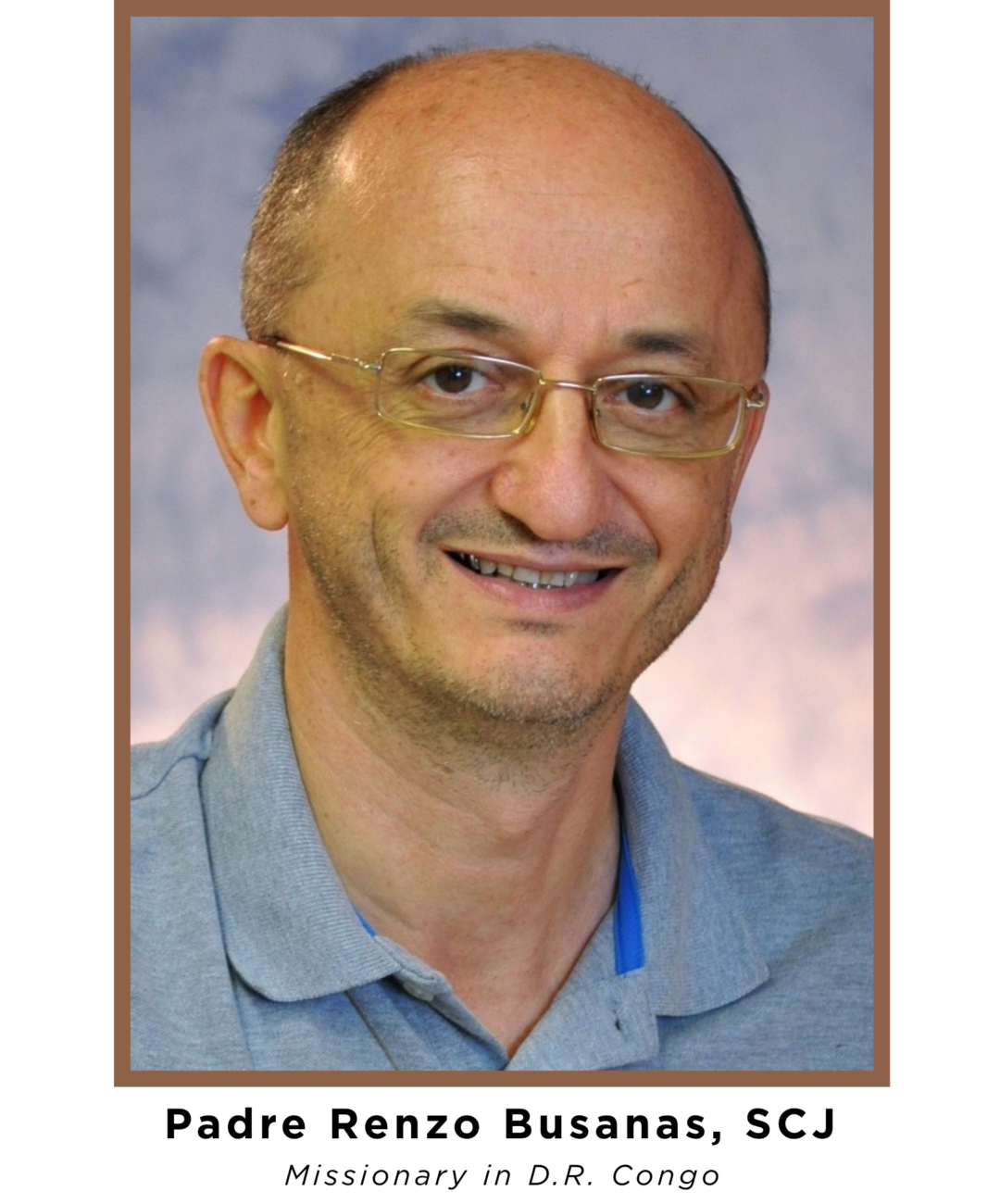 A personal testimony by Fr. Renzo Busana, SCJ, Italian Missionary in the DR Congo for 20 years.
Mambasa, October 8, 2026 – Twenty years have passed since I left Italy for the Democratic Republic of the Congo after living the first fourteen years of my priesthood in Italy. Back then, several people asked me why I chose this missionary path at that moment, in a distant and difficult country like the Congo. My answer was more or less this: I had a dream to fulfill, a dream of my childhood and youth, and now the time had come—without further delay, so as not to risk sealing it forever in the drawer of unfulfilled projects.Yesterday Father Boris asked me on the phone to reflect and write about my mission experience in light of no. 14 of our Rule of Life: “full and joyful adhesion to the person of Jesus… following Him… consecrating ourselves entirely to the love of God and neighbor.”
Today our bishop, gathering the religious of our area, challenged us by asking us to examine what beautiful things we dream of for the fruitful outcome of our missionary presence. He introduced us with Martin Luther King’s “I have a dream,” which was capable of stirring crowds toward brotherhood and equal rights for all regardless of race or status. Afterwards, he spoke to us about Jesus’ missionary project pronounced in the synagogue of Nazareth (Lk 4:16–21)—bringing the good news to the poor, proclaiming liberty to captives—and about the self-portrait that Jesus Himself painted, full of that intimate, paradoxical joy expressed in the ‘Beatitudes.’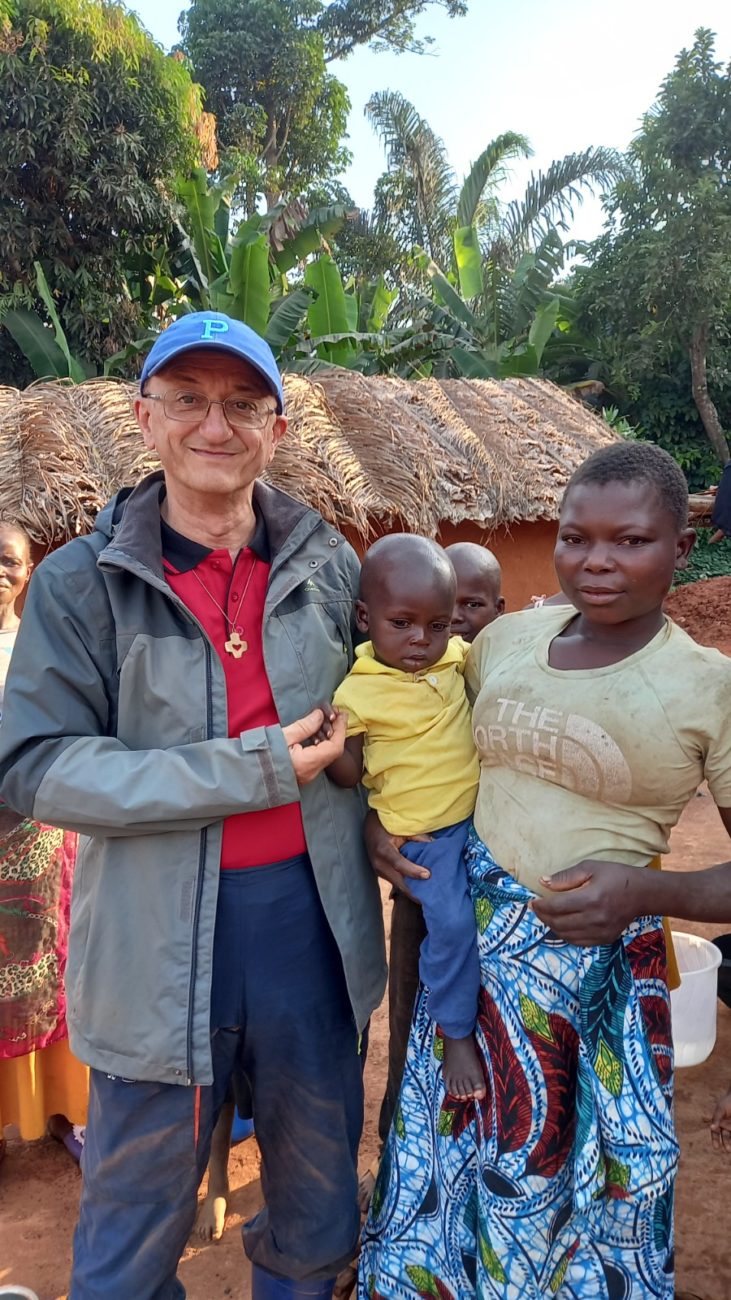
Today I am a ‘refugee’ in Mambasa with my SCJ community, along with about a hundred young boys and girls from our boarding school. We fled Nduye last week after spending two days under the crackle of rifles, machine guns, and bombs exchanged between Congolese soldiers (FARDC) joined by Ugandans (UPDF) and the ADF-NALU rebels, who for years have been terrorizing our province of Ituri with barbaric massacres, kidnappings, and destruction. We too are caught up in one of the many facets of the thirty-year war in Eastern Congo. We seek to evangelize a poor and scattered population; we seek to educate an abandoned ethnicity—the Pygmies—and unsupported orphans. Today we are welcomed by our confreres without knowing what our future holds, waiting for the storm to pass. Like the disciples of Jesus after the killing of their Master and Lord, we fear that everything may be lost. Through prayer, we sow hope in our hearts and do everything possible to support our little ones and the poor.
I dreamed of being a missionary, and the Lord granted it to me. I have always dreamed of peace and brotherhood for the world; today I dream it together with and for our children, so that war and violence may not hurt them further.
Father Bernardo Longo, the first missionary in Nduye, and after him many other SCJs who lived and live in these areas and elsewhere around the world, already had to confront the tragedy of violence and war. The “…unto death…”, a mystery of discipleship and faith that opens to the resurrection, is sometimes not so far from us.
In Gbonzunzu, where I used to be, I planted a coconut. It germinated with such difficulty that I had given the seed up for dead. After seven years, I left Gbonzunzu for Nduye without being able to see or taste its fruit. I probably planted it poorly, or perhaps that is the nature of that seed. The seed of peace must be somewhat similar to that coconut seed.
Yet I cherish the hope that, with the Risen Lord, sooner or later I and we will be able to taste it fully: that the seed will bear fruit and the dream will come true.
(Fr. Renzo Busana, SCJ)