The Encyclical “Magnifica humanitas”: Between Continuity, Rupture, and a Bridge in the Social Doctrine of the Church
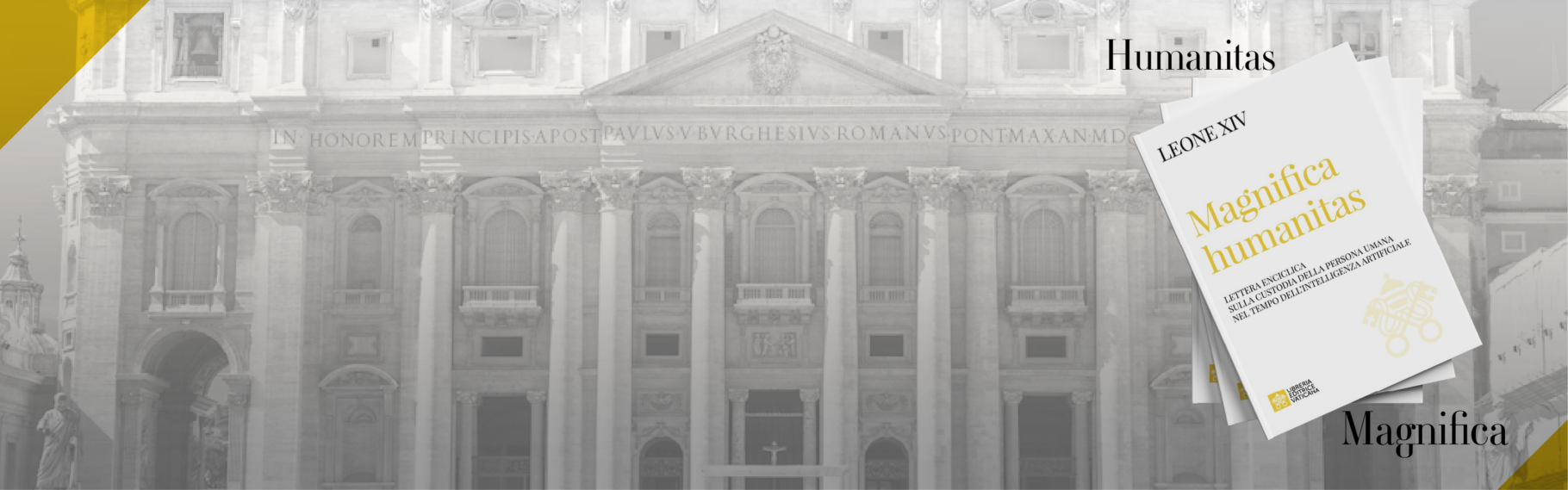


In this in-depth article, Father Michel Simo Temgo, SCJ, sharply demonstrates that while artificial intelligence made headlines upon the publication of Leo XIV’s encyclical Magnifica Humanitas (MH) on May 25, 2026, the Social Doctrine of the Church (SDC) constitutes its true backbone, articulated right from the text’s first two chapters. The author highlights a double theological continuity: on the one hand, a historical parallel between Leo XIII defending the dignity of workers against the Industrial Revolution in Rerum Novarum (1891) and Leo XIV protecting the human being against the digital revolution; on the other hand, a direct extension of the pontificate of Pope Francis, from whom MH adopts key warnings against the globalization of the technocratic paradigm in Laudato Si’, job-destroying robotization, and the proliferation of fake news-generating algorithms. Analyzing the renewal of the SDC carried out by Leo XIV, the article underscores a major conceptual evolution: the encyclical replaces the classic notion of the “preferential option for the poor” with the principle of social justice, an indispensable ethical reading framework to counter new forms of digital exclusion, the opacity of discriminatory algorithms, and invasive mass surveillance, while establishing integral human development and integral ecology as criteria for discernment.
The major contribution of the article also lies in deciphering a “theology of bridges” and a “bridge-document” where the Pope opposes two biblical models facing the technological future: the “Babel syndrome”, symbol of a uniformizing and godless technocratic domination project, and the approach of the prophet Nehemiah, based on dialogue, synodal consultation, and co-responsibility. Finally, the author highlights the prophetic strength of MH, which exhorts the building of a “civilization of love” nourished by the historical testimony of peacemakers, while leaving a lasting impression with an unprecedented and historic memorial gesture: an official mea culpa where the Supreme Pontiff sincerely asks for forgiveness on behalf of the Church for the humiliations and sufferings of the transatlantic slave trade.
Download the full article