The Holy Father’s Calls to Action in Spain and the Dehonian Pastoral Commitment


Father Ángel Alindado, Pope Leo XIV’s visit to Spain is drawing worldwide attention. In light of the local socio-religious context, what aspect of the Holy Father’s message do you consider most urgent and essential for the Church in Spain today?
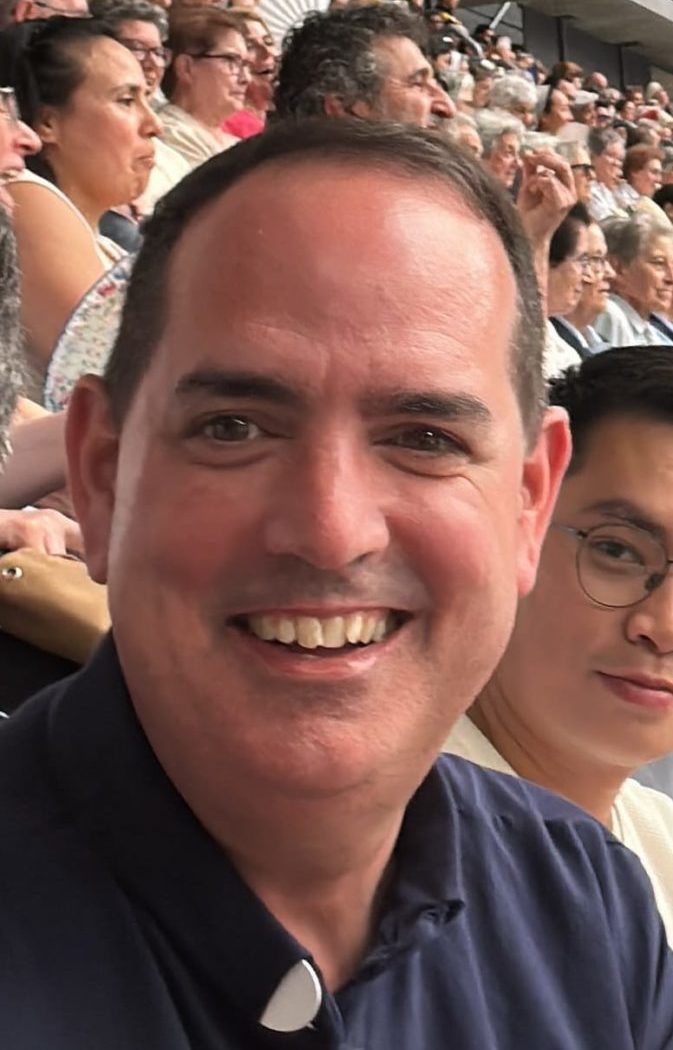 Fr. Ángel Alindado Hernández, SCJ: These days, the Pope is leaving behind profound messages that demonstrate a deep understanding of our society in Spain and how the Church is called to be the leaven of the Kingdom in our country. The references to our great spiritual, cultural, historical, and architectural heritage have been significant. For Pope Leo XIV, this heritage is not merely “museum-like”; rather, it must serve to courageously proclaim Christ.
Among the many messages he has delivered so far, I would first like to highlight some of those shared during his meeting with the pilgrim Church in Madrid, across its three dioceses (Alcalá, Madrid, Getafe). During this gathering at the Bernabeu Stadium, he invited the Church not to close itself off, moving out of the security of our regular reference groups; to tear down the walls that isolate us (using a beautiful metaphor about how the image of Our Lady of the Almudena was discovered following a collapse of the Madrid city wall); to go beyond numbers, data, and facts in order to build true community; to interpret events and situations with depth while celebrating the meaning they radiate; and to be a “living symphony” in the midst of society.
Within the social and political context we are experiencing in Spain, his call for the defense of human life as a goal of civilization vibrated powerfully from the Congress of Deputies during an historic speech widely recognized by civil society. The Church has an obligation to participate actively in the daily life of our country by proposing—clearly and without imposition—the truth that comes from the Gospel and the inherent commitment to defending the most vulnerable, while accompanying and loving everyone’s life, especially those of the most fragile.
On the first day of his journey, the Pope met with approximately 600,000 young people and exhorted them to step forward and become true agents of positive change in society. Given your pastoral ministry within the Dehonian schools of the Spanish Province, how does this call from the Holy Father resonate with you?
In his address to the bishops, Pope Leo XIV stressed that “the human heart is not fulfilled by accumulating experiences, possibilities, or temporary securities… but by discovering a calling.” Following this statement, he insisted on the need to live the Gospel with joy, service, and communion: “living communities, happy priests, families capable of testifying to the beauty of fidelity, a Church that knows how to show with simplicity that following Christ does not impoverish existence, but expands it.” It is perhaps on these aspects that our evangelizing work must focus, which we could summarize as a joyful witness of each vocation within the Church and for the world.
He urged young people to focus on “real” life, eloquent silence, shared joy, and changing history through love. These are all very “Dehonian” themes that speak to us of self-giving, transforming the world, looking at society with an honest gaze, listening to others and to history, and perceiving the “today” of God that challenges us. Education has everything to do with this. These are words to continue savoring and deepening in order to renew our educational, evangelizing, and pastoral work.
Moving from inspiration to action, what concrete initiatives have you already implemented or do you plan to promote to genuinely motivate young people to take on this dynamic role?
In our educational institutions in Spain, our responsibility is clear: to provide a “Christian” education by cultivating both the intellect and the heart of young people. The serious and in-depth study of various subjects contributes to a critical understanding of our world through different branches of knowledge. Our Christian initiation activities, catechesis, efforts to proclaim Christ to those who do not know Him, and activities aimed at deepening faith and spiritual and interior growth are all meant to give reason and purpose to our faith in the Lord and as a Church.
Charitable work, which develops through various initiatives throughout the year (learning about the Dehonian mission, fundraising for projects in other places where Dehonians are present, volunteering, joint collaboration with Caritas or Manos Unidas, sponsorships, etc.), makes sense because the Gospel and Charity are inseparable. Furthermore, mission experiences with Dehonian religious communities, along with shared prayer and adoration, open the horizons of children, youth, their families, teachers, and staff, prompting the question: “Who is my life for?”.
As Dehonians, we always emphasize the active role a Christian must play in society. Pope Leo has insisted these days on not relegating faith to a purely personal level, highlighting how we in Spain share our faith in the streets, through processions, and public expressions of faith. The great Corpus Christi procession experienced in Madrid last Sunday reflects this unique and shared tradition that runs from one end of our country to the other. Yet, we cannot forget the depth of the spiritual experience that must underpin this external beauty and the commitment it points toward: “May it teach us,” the Pope said, “to kneel before God and before our neighbor.”
At the socio-political level, one of the most anticipated moments of the papal itinerary is, undoubtedly, the stop in Las Palmas de Gran Canaria, where the Pope will meet with migrants. To what extent are the Dehonians of Spain sensitive to this migratory reality? What is being done on the ground pastorally?
For example, we have “Casa San Juan,” a ministry that the Dehonian religious community in Málaga runs in close, joint collaboration with the Fundación La Merced Migraciones. It specifically cares for young adults who can no longer remain in reception centers for migrant minors, helping them achieve a better, gradual integration into the host society. This is perhaps the ministry where we have the most immediate and direct contact with young people who have left everything behind in search of new opportunities in Spain, with the added tragedy of crossing, for example, the Strait of Gibraltar. However, this is not the only place where the reality of immigration is felt in our religious Province.
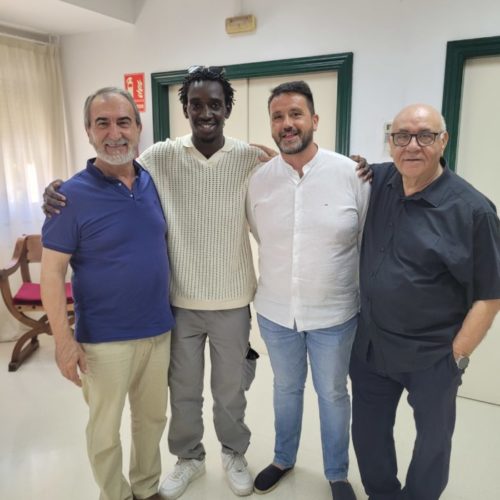 We see it and live it day by day in our works. We cannot forget the work carried out in the parishes entrusted to the Dehonians where, through parish Caritas, newly arrived families in Spain are assisted and accompanied through their first steps. Our parishes are also places where the Catholic immigrant population has an ever-growing presence, transforming the face of the ecclesial community.
In our educational ministries, the students also reflect this reality. In our schools, there are diverse faces from different origins, cultures… and religions! Our schools, which are confessionally Catholic, are also places of study and growth for children and youth from families originating from Eastern Europe, the Middle East, North Africa, and South America. And everyone, regardless of their religious confession, encounters the same proximity, affection, support, dedication, listening, education, and welcome. Without distinction. This evident approach also educates our youngest students in respecting and understanding those who are different, who think and believe differently, and who come from a diverse cultural background.
Looking beyond these few days, what lasting fruits do you ultimately hope this apostolic visit will produce both within the Church and in Spanish society as a whole?
I will be brief: a Church renewed in the joy of proclaiming the Gospel, and a society aware of how faith has shaped us, giving us a precious way of living, feeling, and expressing ourselves, as well as a sense of justice and peace that must be valued and upheld.