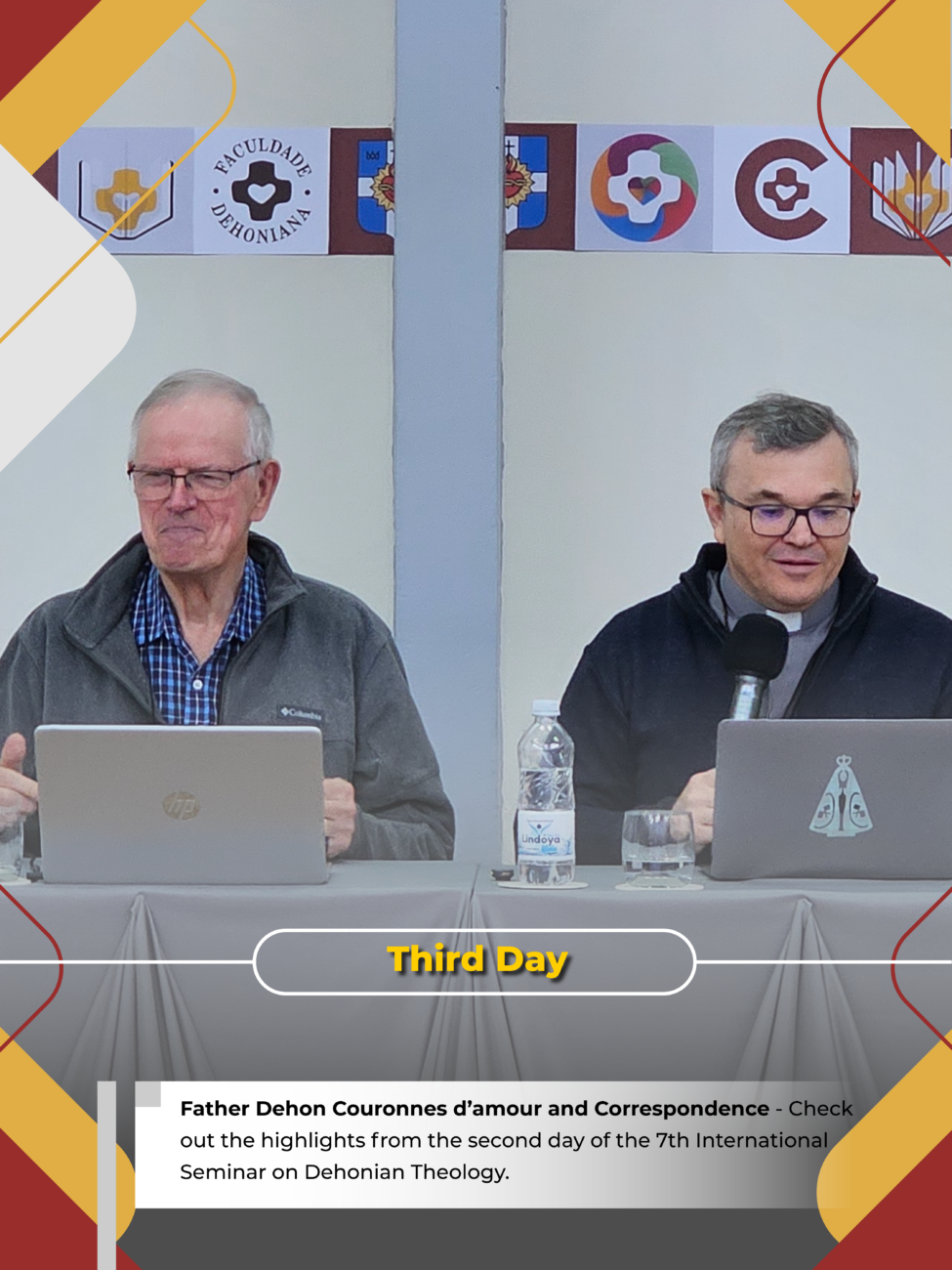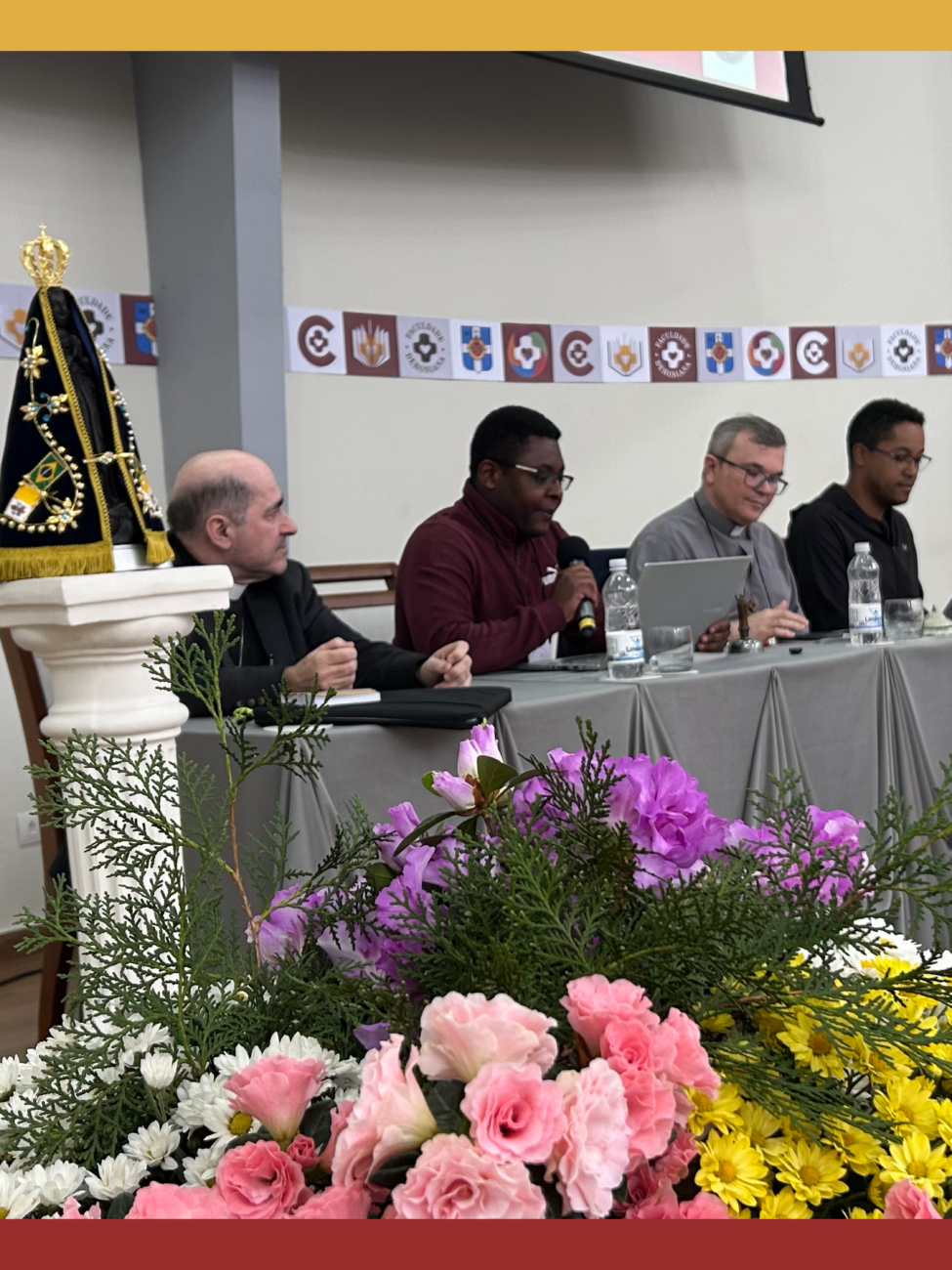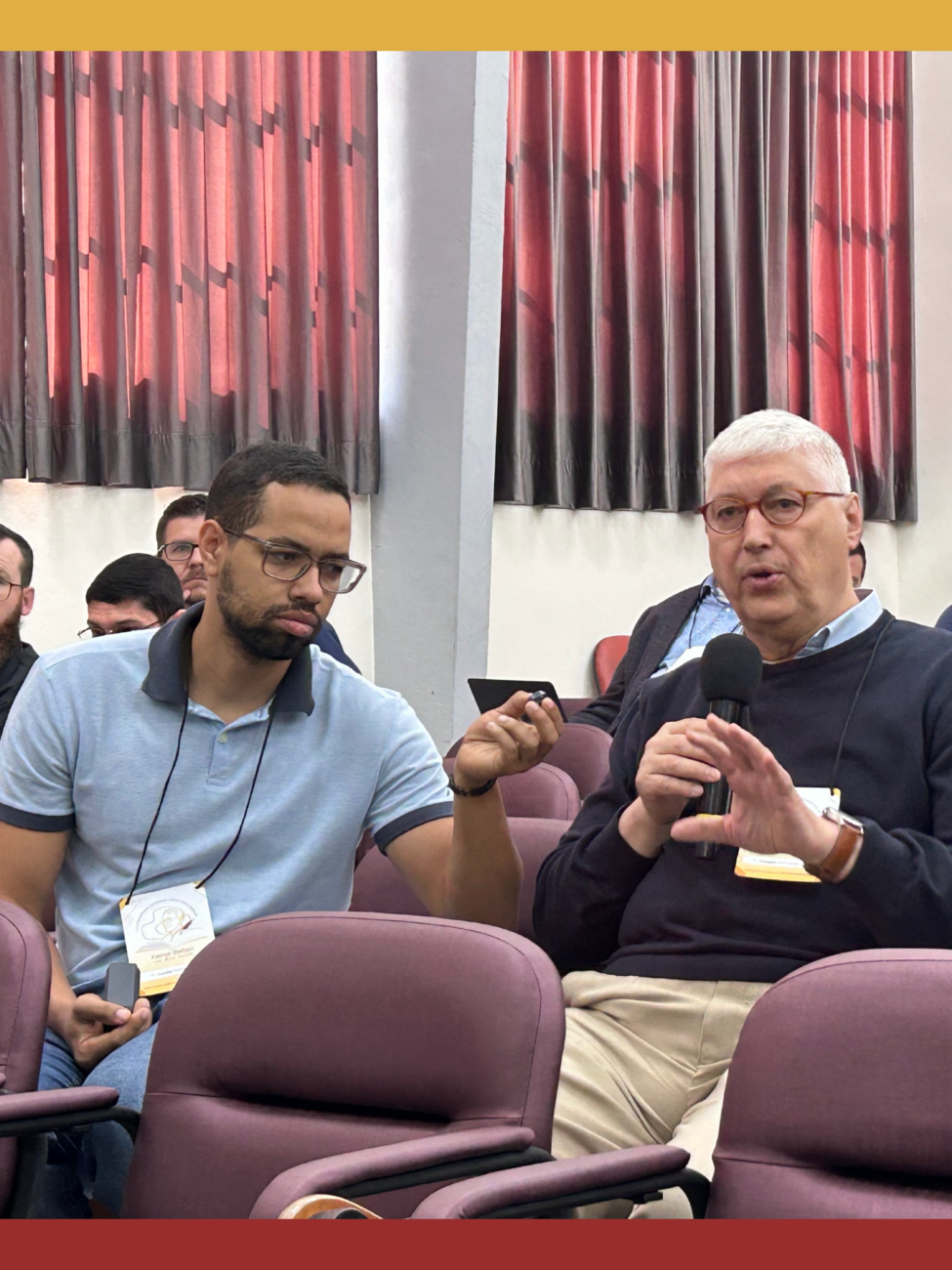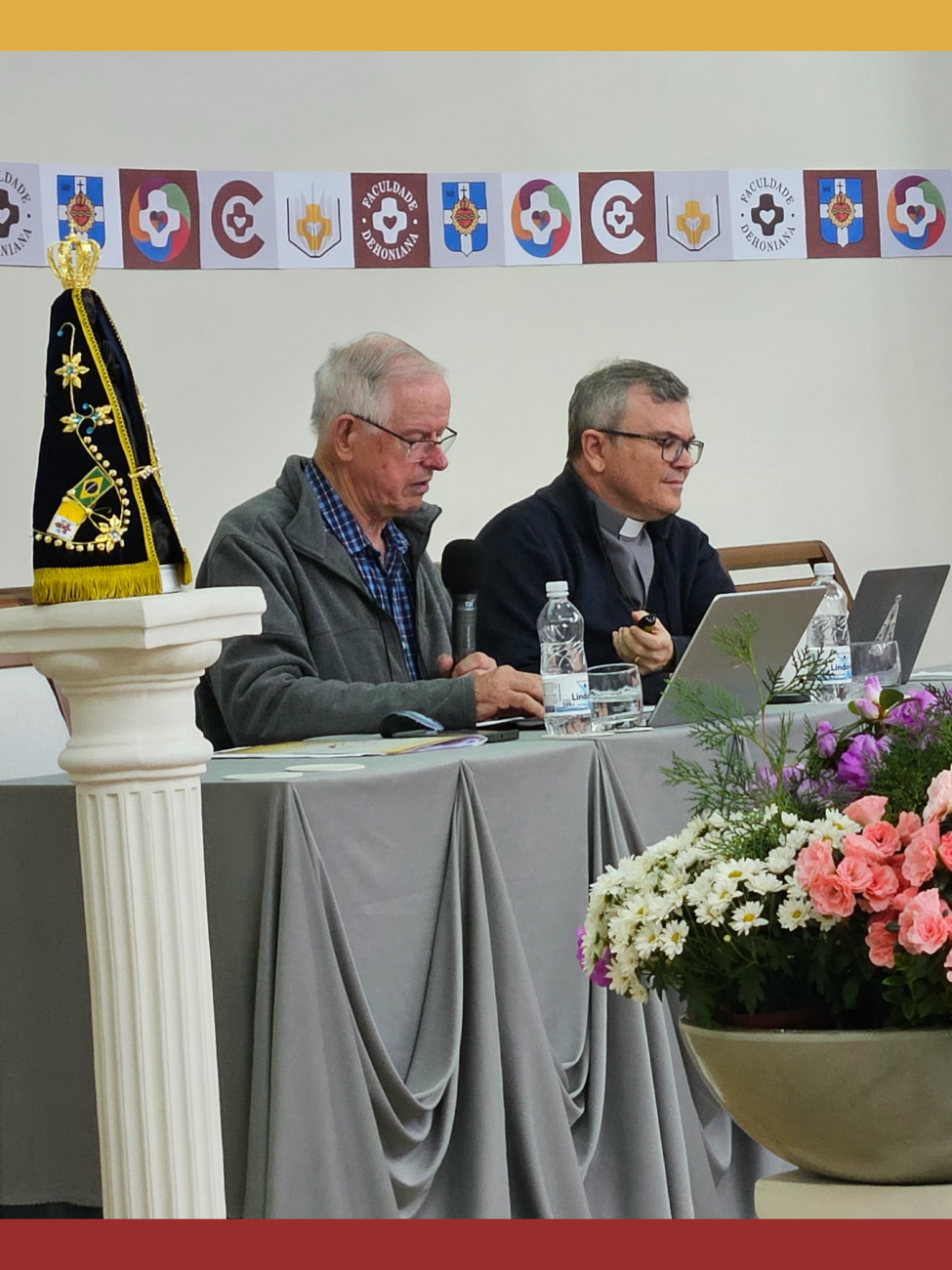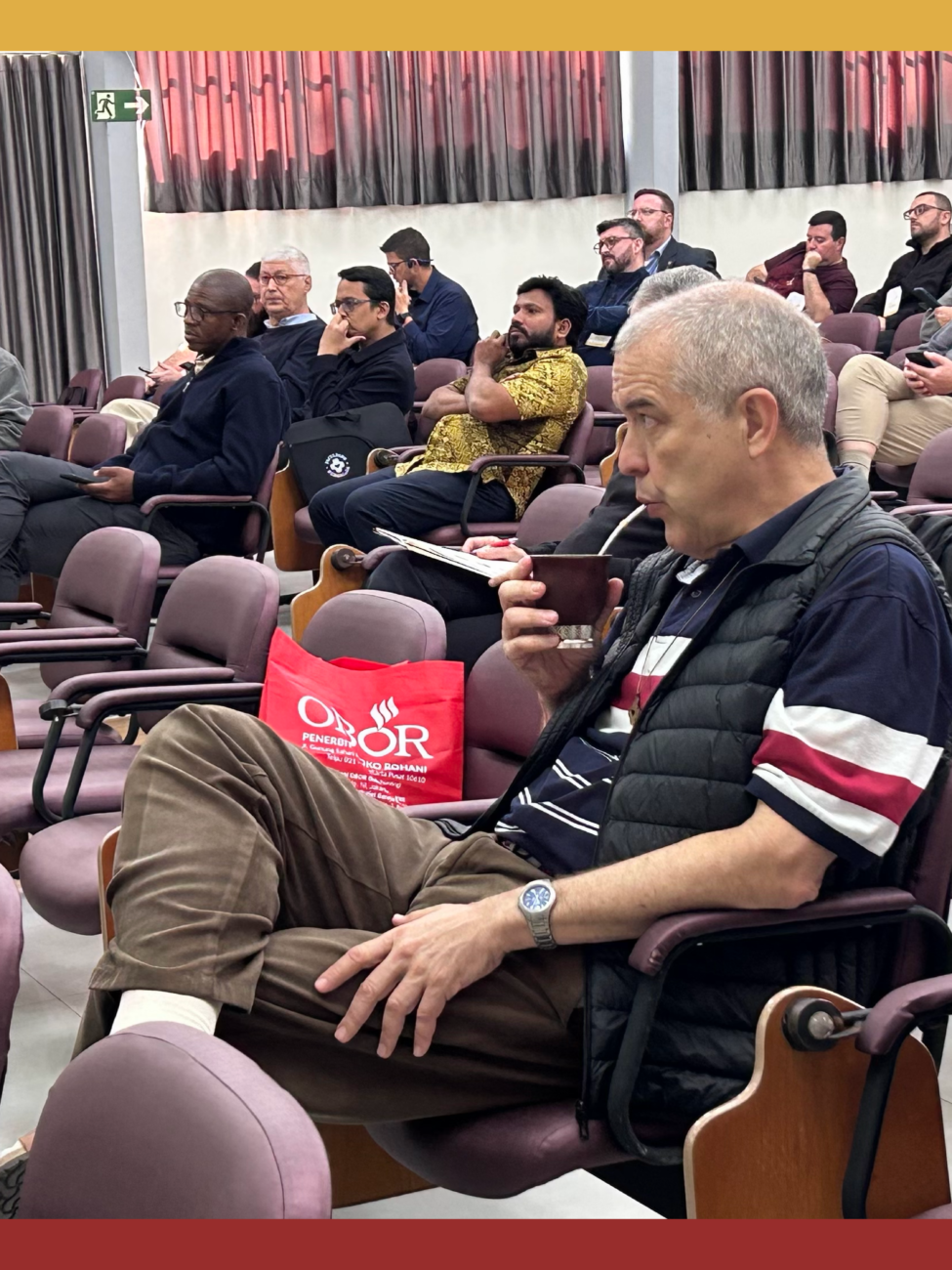
Third Day: “Couronnes d’amour” and “Correspondences”


The third session of the Seminar deepened the figure of Father Dehon through his spiritual writings, taking Couronnes d’amour as the reference text. The reflection sought to situate the work within the broader trajectory of the Founder’s spiritual life and, at the same time, to move beyond a reading that would separate the Dehon dedicated to social questions from the Dehon devoted to mystical life. The starting point was therefore the unity of his experience: understanding how interior life, love for Christ, and mission are articulated in his writings.
The North American Theological Commission focused its attention on the notion of “pure love,” an expression that recurs in Dehon’s spiritual writings. The analysis showed its insertion in the French spiritual tradition, especially in the language associated with Fénelon. The concept, however, carries an ambiguity that requires discernment. It may indicate free and total self-gift to God, but it may also be understood as the annihilation of the person. For this reason, the commission proposed considering how this language can be translated into the present context, including through the expression “unconditional love”: the free and gratuitous love of God, revealed in Christ and symbolized in the Heart of Jesus. The issue is not simply to update an ancient expression, but to understand the spiritual experience it seeks to communicate.
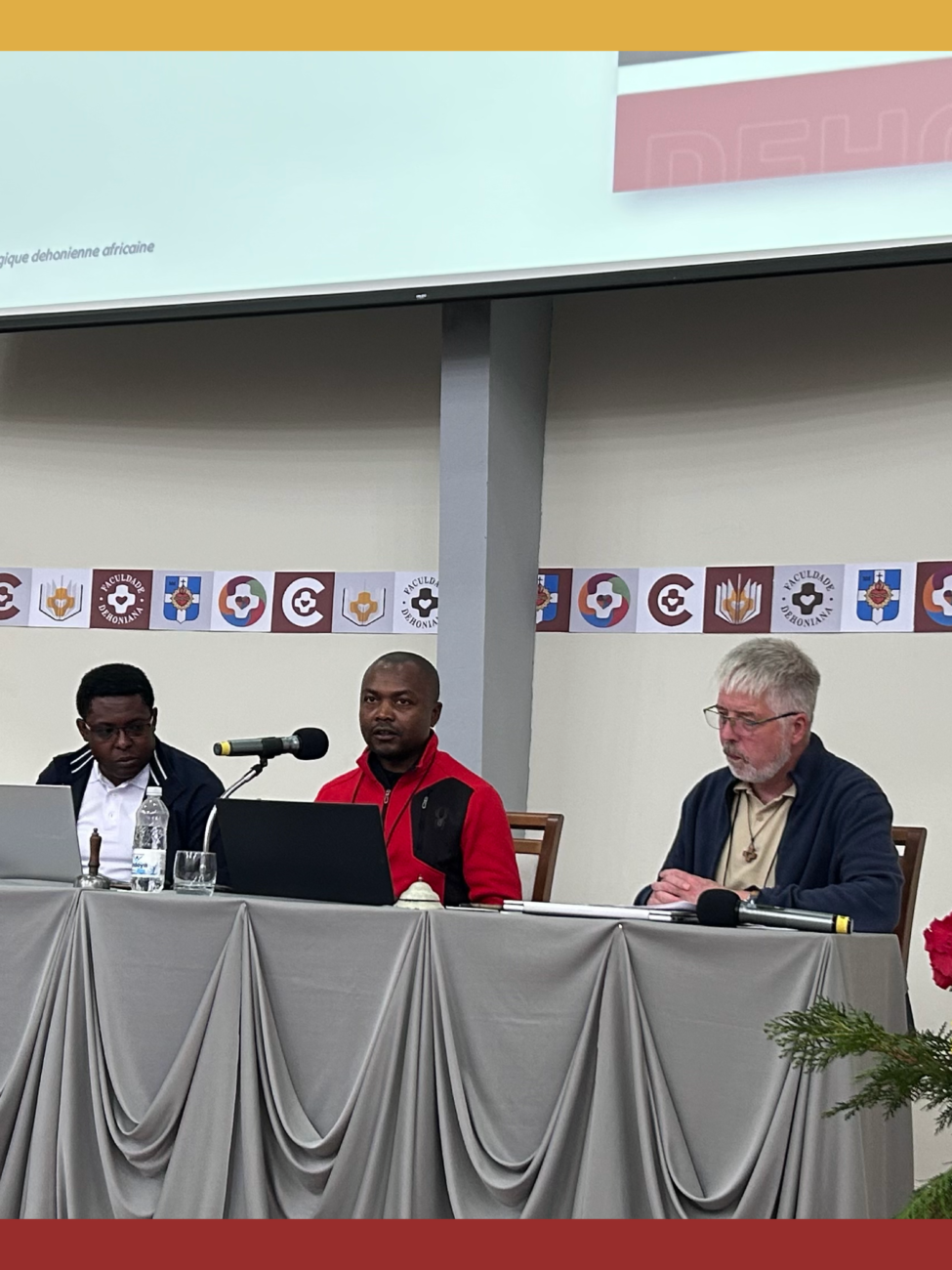
The European Theological Commission, for its part, deepened the reading of Couronnes d’amour from its spiritual tradition and historical context. The expression “pure love” appears many times in Dehon’s writings and reveals the influence of a French spiritual tradition that must be taken into account if his language is to be properly understood. At the same time, the need was stressed to confront Couronnes d’amour with other texts of Dehon, especially the materials used in the retreats of the first Dehonians. Some of these texts already had the character of a retreat before being later published and reworked. This comparison can better illuminate Dehon’s choices and the evolution of his spiritual language. Attention was also drawn to the context of the Congregation after 1904, when Dehon was already in Brussels and the reality of the Congregation was beginning to move beyond its originally French horizon.
In the group work, two concepts emerged as central: pure love and interior life. They appear fundamental for understanding the unity between Dehon’s mystical dimension and his social commitment. Interior life does not mean withdrawal from reality, but the capacity for presence. In a world marked by dispersion, by difficulty of attention, and by the absence of true presence, it can mean learning once again to stand before God, before others, and before reality. Pure love, in turn, was related to a love that does not grow weary, that perseveres and goes to the end. The groups asked whether these characteristics can still offer a properly Dehonian contribution to the world of today. Methodological questions were also raised about the need to deepen earlier spiritual texts and to confront them with Couronnes d’amour.
In the plenary, these questions were taken up and broadened. The ambiguity of “pure love” was considered a theme that deserves further deepening, including in dialogue with contemporary society and with psychology. The notion of identity was also placed in question, especially in the face of the language of “annihilation” or total self-gift. How are we to understand a radical offering of self without turning the spiritual experience into loss or destruction of the person? At this point, Trinitarian theology appeared as a possible key of interpretation: self-gift does not eliminate the subject, but realizes the person in relationship. The relation between Creator and creature, and the understanding of the person as a relational being, can help us think Christian self-offering without denying identity.
The session thus left several questions for further deepening: how are we to understand “pure love” today without reducing it to the annihilation of the self? How are we to articulate interior life and concrete presence in the world? How does the experience of the Heart of Christ illuminate the relation between love, self-gift, and mission? And how are we to read Couronnes d’amour simultaneously within its spiritual tradition, within its historical context, and in the face of contemporary challenges?