New Mission in Cuba: At the Heart of Precariousness and Mismanagement
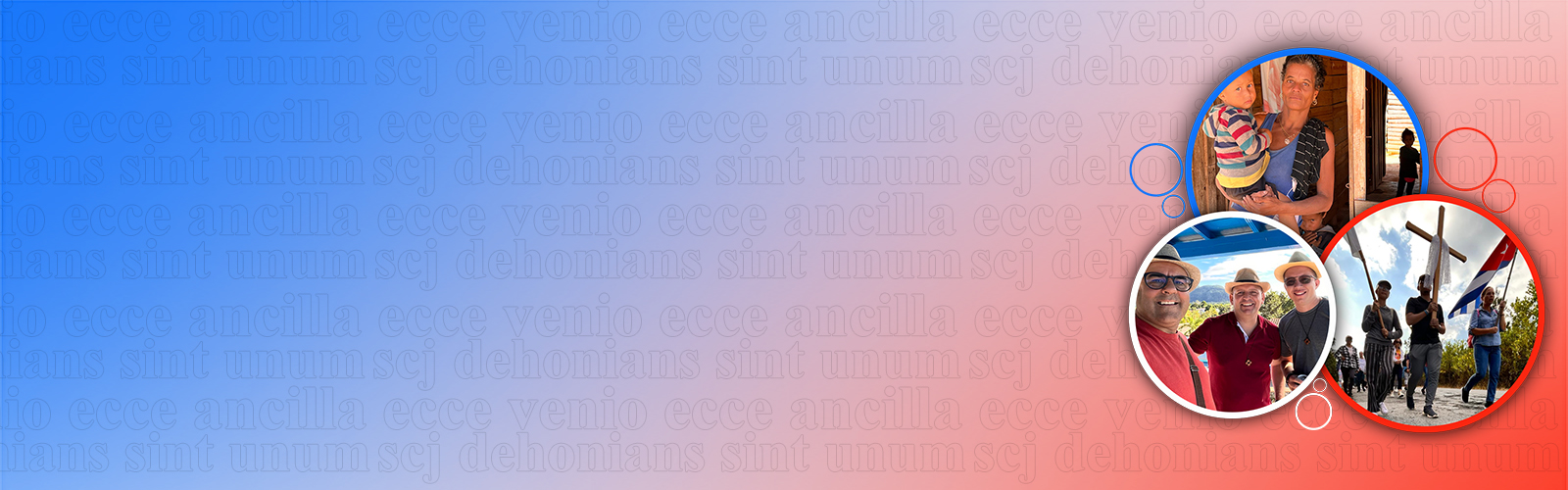


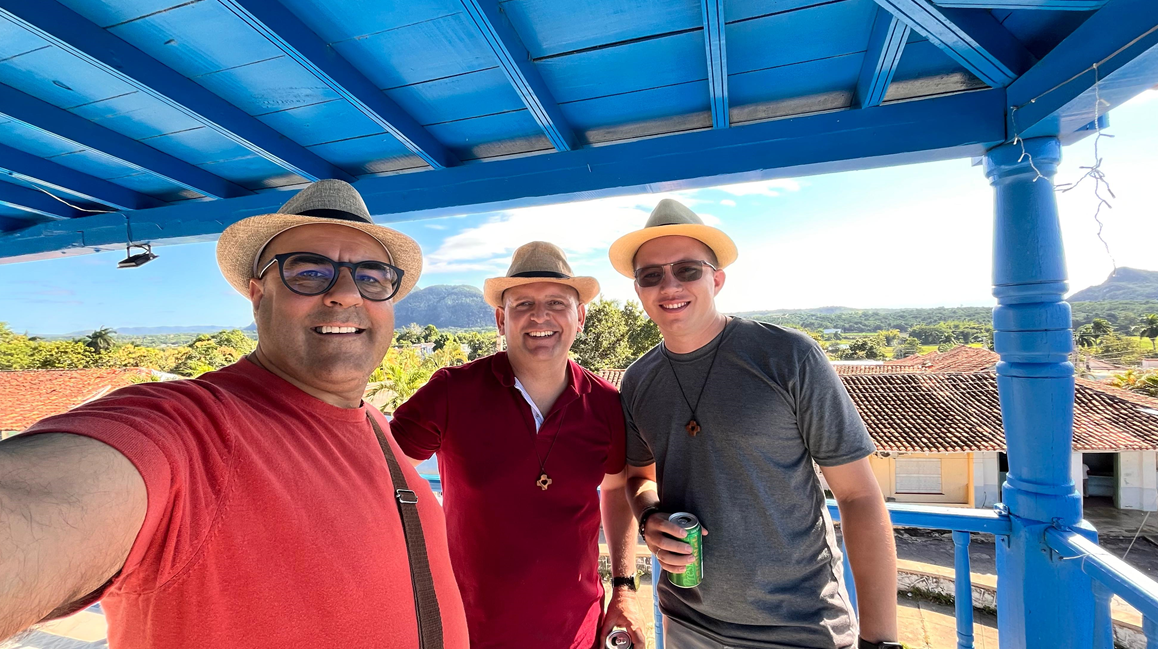
On December 8, the Superior General, Father Carlos Luis Suarez, sent three Priests of the Sacred Heart to Cuba. In sending them, he stated that they were following the charism of the Congregation’s founder, Father Leo Dehon, which consists of “being where the Heart of Jesus suffers, with the little ones, the poor, and the abandoned.” They are “called to practice proximity, spiritual accompaniment, and the promotion of hope. This mission does not consist of great actions, but of patient sowing and a testimony of brotherhood.”
Today, a few months after being sent to Mantua, Father Francisco Javier Luengo Mesonero SCJ draws an initial assessment. He is a member of the community of Mantua in Cuba, where he lives and works with two confreres: “Father David Adolfo Oropeza SCJ, from Venezuela, is the parish priest and also an excellent cook and farmer. Brother Dennys Alejandro Vélez Alava SCJ is still in formation and brings his experience with children and young people. He is also the community’s treasurer.”
The Church was no longer present on site
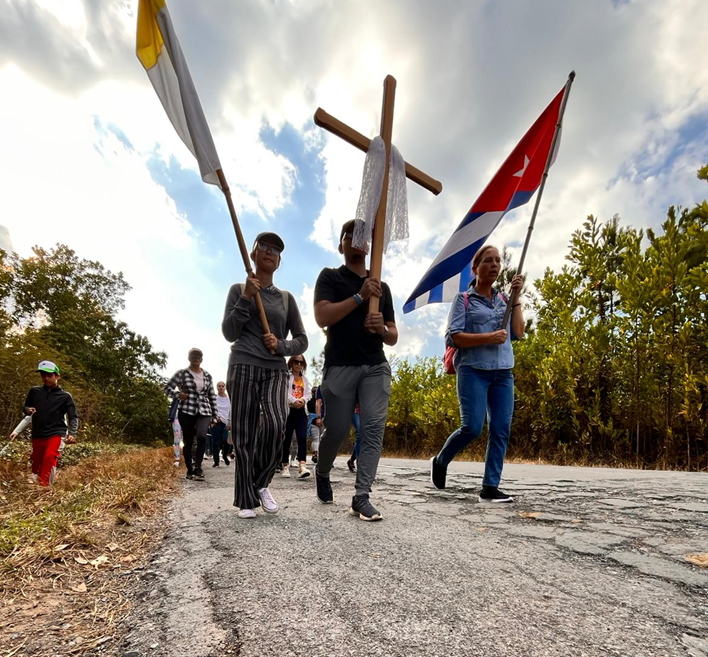
Mantua is a rural municipality located at the western end of the beautiful island of Cuba. When you live here long enough, you realize that it is a kind of terminus, the end of the road, a physical and existential finis terrae. Not only is it far from everything, but it is also difficult to access, as the roads are riddled with potholes and have not been repaired for over 60 years. Heading north from Mantua, it gets even worse. This feeling of abandonment and decay was the first thing that struck us upon arrival.
The inhabitants of Mantua also experienced this abandonment firsthand regarding the Church. They saw a succession of parish priests who stayed no longer than four or five years. The last two priests looked after parishes located two hours from here.
The abandonment of a community can be unbearable for a caring and benevolent pastor. In this specific case, such a pastor exists: Bishop Juan de Dios Hernández of Pinar del Río, who tried by all means at his disposal to look after these isolated communities. To do this, he knocked on many doors until he found a response with the Dehonians.
The desire for a new mission
Since my childhood, I have cherished the wish to work in a country other than my own. Now, at 54, I asked myself if what I had experienced so far was all that life had to offer me. I felt a little dissatisfied and also a little disappointed by a lifestyle that had perhaps fallen too much into routine, comfortable and risk-free. This made the Congregation’s call to this new mission resonate strongly within me.
Precariousness marks life in Mantua, Pinar del Río, Cuba
The parish is located in a small rural town in the westernmost part of the island. It is characterized by its isolation, being the last locality at the end of an almost impassable road. From here, there are several communities of various sizes, especially to the north, on the coast. They are close to each other, but here distances are measured not in kilometers, but in hours. Arroyos de Mantua is 13 kilometers away, but it takes an hour to get there by motorcycle; by car, it is very complicated. Dimas is 40 kilometers away; the road is slightly better, but it takes two to two and a half hours to get there.
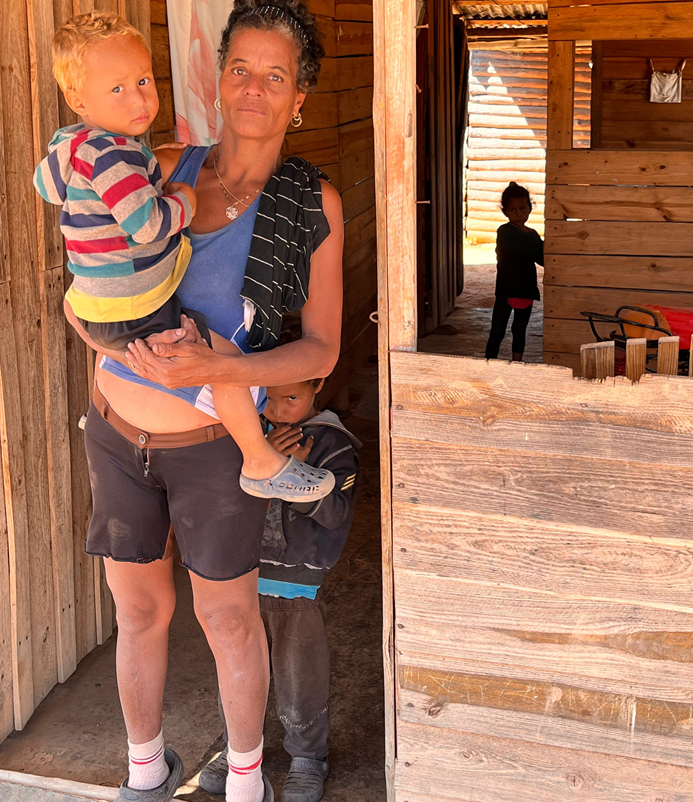
The reality here is the same as in all of Cuba: poverty, shortages, lack of gasoline, absence of transport, and extremely high prices. Almost everyone has a small field where they grow rice, corn, tobacco, and other vegetables and tubers. Every time I walk around the surroundings, I feel as if I have returned to a pre-industrial past: pairs of oxen with ploughs, horse-drawn carriages, sun-tanned farmers under wide-brimmed straw hats.
On the ecclesial level, the diocese of Pinar del Río is a challenge. Faith has been maintained here mainly thanks to grandmothers who looked after the churches and taught the faith to their grandchildren, risking their own lives, freedom, and rights. Many people tell us stories of political and religious oppression that some paid for with prison or the loss of rights or privileges.
Atheism continues to be taught in classrooms, and although the Church is respected, we feel the inquisitive eye of the State in everything we do. One cannot speak openly about political or social issues. There is always someone listening and ready to report to the authorities what is being done and said. In this environment, the Church is a suffering community that sometimes has to face misunderstanding and difficulties. There are very few vocations, and some young priests could not endure the conditions of isolation and insecurity and had to emigrate.
The pastoral tasks are the usual ones of a parish: liturgical celebrations, catechesis, youth groups, visits to the sick, and Caritas, among others. In this specific context, we want, after several years without a priest, to gradually resume parish activities. Under a communist regime, permitted activities are very limited; they must be restricted almost exclusively to the religious sphere and can almost never take place in public spaces.
Living conditions as harsh for the fathers as for the inhabitants
Cuba is experiencing the worst crisis in its history. Seventy years of communism have finally paralyzed the island’s economy. Living conditions are very difficult. Every day, one must set out to survive and try to bring home some food and daily necessities. Almost all jobs are state-owned; everyone works for the government. Wages are ridiculously low. A teacher earns no more than four thousand pesos, which is less than ten dollars.
While there are subsidized basic food items like rice, oil, or beans, the prices for meat, fish, or coffee correspond to those on European markets. Some do not even have one meal a day on the table; others lack everything else. There is an atmosphere of despair and pessimism. Young people only think about how to leave the island to have a future.
Added to this is the fact that one lives in constant uncertainty about when there will be electricity or not. In our region, the average power supply is four hours a day, spread across day and night. As soon as there is light, people rush to cook or do laundry. Added to this is an absurd and humiliating bureaucracy that entangles people in a labyrinth of requests and regulations that they must fulfill in a completely inefficient manner.
For example, there are shops where you can only pay in local currency, while others only accept dollars. There are products available only with virtual money, while others exceed the amount you can withdraw daily from the bank. Sometimes people go from one place to another to see if there is any meat or bread in this or that shop. Sometimes they stand in endless lines waiting to buy medicines that only arrive once or twice a quarter in small quantities.
Reality challenges you every day in unforeseen ways. We are used to a social, economic, and political system that tends to make people’s lives easier. Here, it seems to be the opposite: life becomes more difficult every day for simple people, and the State makes it even harder by introducing more and more restrictions and controls.
This reality is a great challenge for us. Especially because it affects us personally, as we are part of the people and have no privileges. We know that we will never be in the same precarious situation as the people, but we experience the same blackouts, the same uncertainty, the same difficulties in obtaining food or supplies. Every day is a challenge.
This makes us vulnerable, but at the same time gives meaning to our presence here. The people know this and help us overcome all sorts of adversities.
Difficult situation for the Catholic Church in Cuba
The situation of the Church is not simple. For over 60 years, practical atheism has been taught in schools and on the streets. Since Pope John Paul II’s visit more than 25 years ago, a phase of tolerance toward the Church began. Currently, the authorities cooperate with us, providing us with a certain amount of gasoline and offering some help. Nevertheless, we always feel the control over everything we do. The Church’s activities must not go beyond the purely religious. Many people have lost all connection to Christianity, which makes evangelization very difficult. Added to this is the great influence of evangelical sects found in all neighborhoods, which are not friendly toward us.
Another serious problem the Church faces is the lack of vocations. It is barely possible to offer adequate catechesis and youth ministry that leads to a vocational decision. Furthermore, many young priests leave the country as soon as they have the opportunity. The Catholic Church is a suffering Church, which suffers with the people and lives for the people. The bishops are true shepherds, simple and committed, as are most priests and laity. Consecrated life is an example of brotherhood and commitment, although it has declined significantly during this whole time. Currently, the Church is the only social interlocutor standing up to the communist regime and often fills the immense supply gaps that the State cannot or will not close.
Social canteens, kindergartens, nursing homes, distribution of medicines: the Church makes many efforts to alleviate the severe crisis in which this society lives. The people know this and therefore have great respect for us.
“People are the true capital”
Cubans are fundamentally good. Like all who have suffered, they are always ready to share and help those in need. We could not feel more “at home.” People go out of their way to make us feel good. Everyone welcomes you into their home, even if they are not believers. The people are the true capital of this so-battered society.
They make us feel at home and motivate us to continue our work that has just begun. The commitment of Christians is admirable. They maintained the parish during times when there was no priest. Not a single parish activity was stopped during that time. This says a lot about the deep faith of these people.
How the Priests of the Sacred Heart translate “Sint unum”
Dehonian values are lived very differently in this part of the world. Undoubtedly, the Ecce Venio—that is, Jesus’ attitude of giving his body and life completely—takes on its full meaning in Cuba. Every day is an exercise in availability, a willingness to open oneself to God’s will amidst difficulties and privations.
Pre-established plans, planning, or projects are of little use here. One must be grateful for everything that succeeds. Sint Unum is lived in two ways: as a desire and as a discovery. A society torn apart by ideology, where most people do not dare to say their opinion because they feel spied on by their own neighbors; the situation of families separated by the drama of immigration, the failure of life projects due to the constantly deteriorating situation—all this calls for reparation and a sense of community. People need belonging and therefore respond to our calls with a genuine desire for unity. For me, this is a discovery, an experience of Sint Unum that I have never had before.
Limits and personal learning
I do not encounter too many limits—rather challenges of a life for which I was never prepared. I do not come from the countryside and cannot do many things that are necessary here: repair things, manage a garden, prepare food, or resolve situations I have never faced. From the people, I receive nothing but gratitude and kindness. The personal learning is total. I had to learn to ride a motorcycle, light charcoal, lay a cable for an extension; I had never been a parish priest and now I have to look after a parish together with my brothers from the community.
Sometimes I feel a bit useless; I have always been a city person and quite clumsy with my hands. But this feeling of insecurity also teaches me to be patient. Without patience, you cannot live in Cuba.
The mission can take root
I believe that the simple presence in Mantua is already a success. Beyond that, one cannot have expectations or plans here. In a year, I would be very happy if the three of us were still as enthusiastic as we are now to live the everyday life with these people, without succumbing to pessimism or fatigue. If, in addition, we had a few solar panels and a few more chickens in the coop, that would be wonderful.
Source: scj.de