As part of the Dehonian Jubilee (2024–2028), we are pleased to share the fourth reflection and testimony, centered on Constitution no. 12.


The Superior General’s Introductory Letter for the Dehonian Jubilee (2024–2028) highlights that our celebration’s spiritual core rests on reflection upon Constitutions nn. 9–39. We are pleased to share the fourth reflection and testimony, centered on Constitution n. 12.
His way is our way (Cst. 12)
In him, the New Man was created in God’s image, in the righteousness and holiness of the truth (cf. Eph 4:24). He gives us the faith that, despite sin, failure, and injustice, redemption is possible, offered, and already present. His Way is our way.
 Cst. 12 concludes the progressive revelation of Christ’s identity and its implication for the believer, in particular for the dehonians, guiding us to know Christ as “the Living One” and the “New Man. Cst. 12 applies this ‘knowing who Christ is’ directly to the existential condition of the dehonians living in a world of sin, failure and injustice. It moves from the objective fact of redemption (Christ’s saving act) to the subjective appropriation of that redemption (our call to follow His path).
In the previous numbers, it is already underlined the faith that God’s project of salvation will not be abandoned and that salvation is possible, offered, and already present. The highlight on the Cst. 12 is more on the impact on the life of believers. Faith in God’s fidelity infuses courage, illuminates, pacifies, and brings joy, especially in a world that often causes anguish and pessimism. It gives a reason to believe that redemption is not merely a distant hope despite the realities of sin, failures, involutions, opposition, and injustice that characterize human history.
Because the “New Man” has been created in Christ, the task for the dehonians is to “put on” this new man, aided and sustained by the grace of the sacraments. Cst. 12 strongly highlights this task with the concluding statement “His Way is our way. It summarizes the practical implication of this logic of life according to the New Man. Specifically, Christ’s way of “total obedience and availability to the will of the Father” is now our only way. Following “His Way” defines the dehonian approach to the mystery of Christ. The principle and center of their religious and apostolic life must be union with “Christ’s reparative oblation to the Father for humanity”. Therefore, if dehonians wish to contribute to the advent of the Kingdom of God and be its witnesses, their “following” of Christ must be a journey toward the very “holiness” of Christ, distinguishing themselves in the imitation of His sacrificial love.
Saying “His way is our way” means that the dehonians are called to be new men in Christ. This concretely means taking the deliberate and progressive journey to living out daily the grace of baptism, accepting the logic of the Eucharist that “the grain of wheat falls to the ground, dies and produces much fruit”.
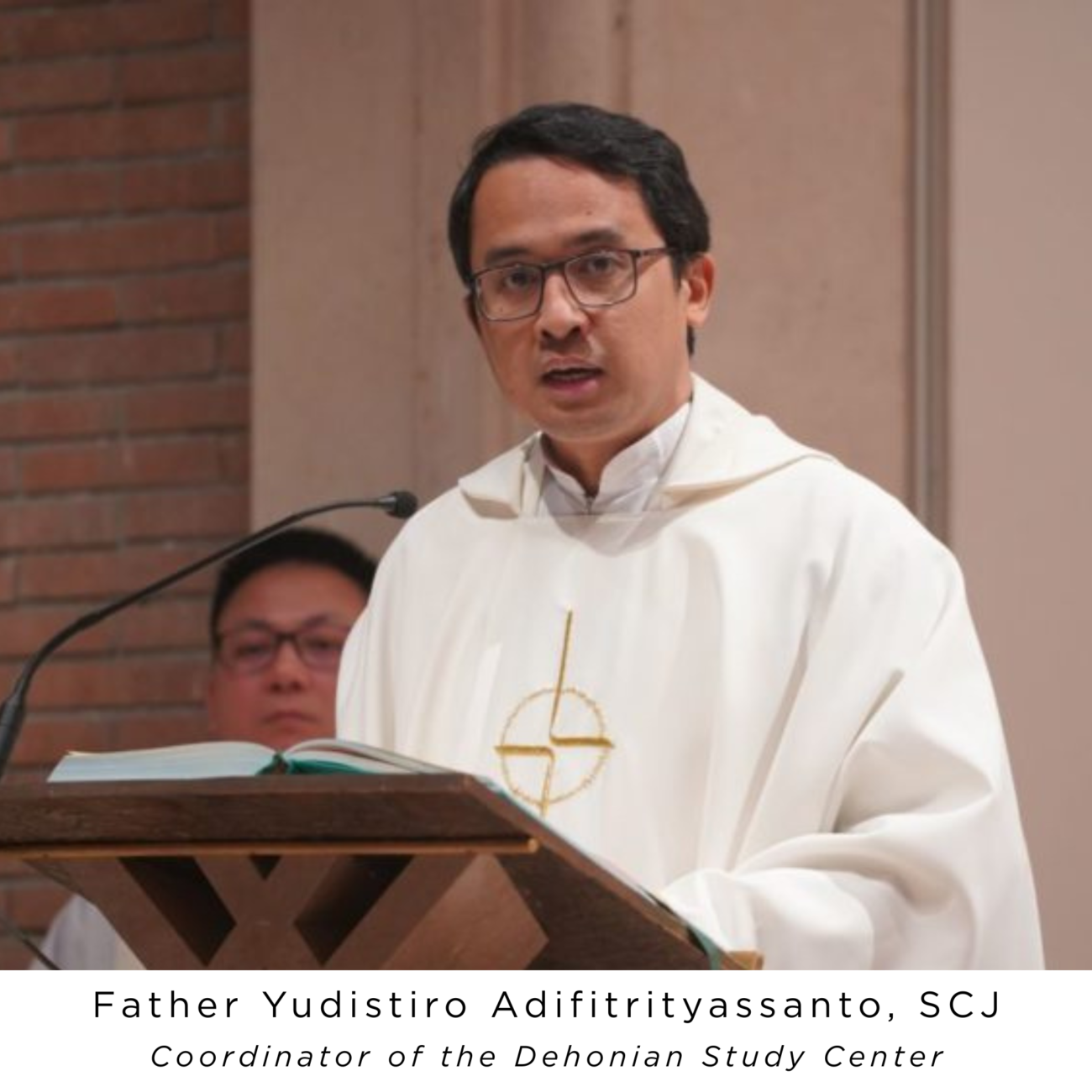
Fr. Yudistiro Adifitrityassanto, SCJ
Pastoral Testimony: “His Way Is Our Way” (Const. 12)
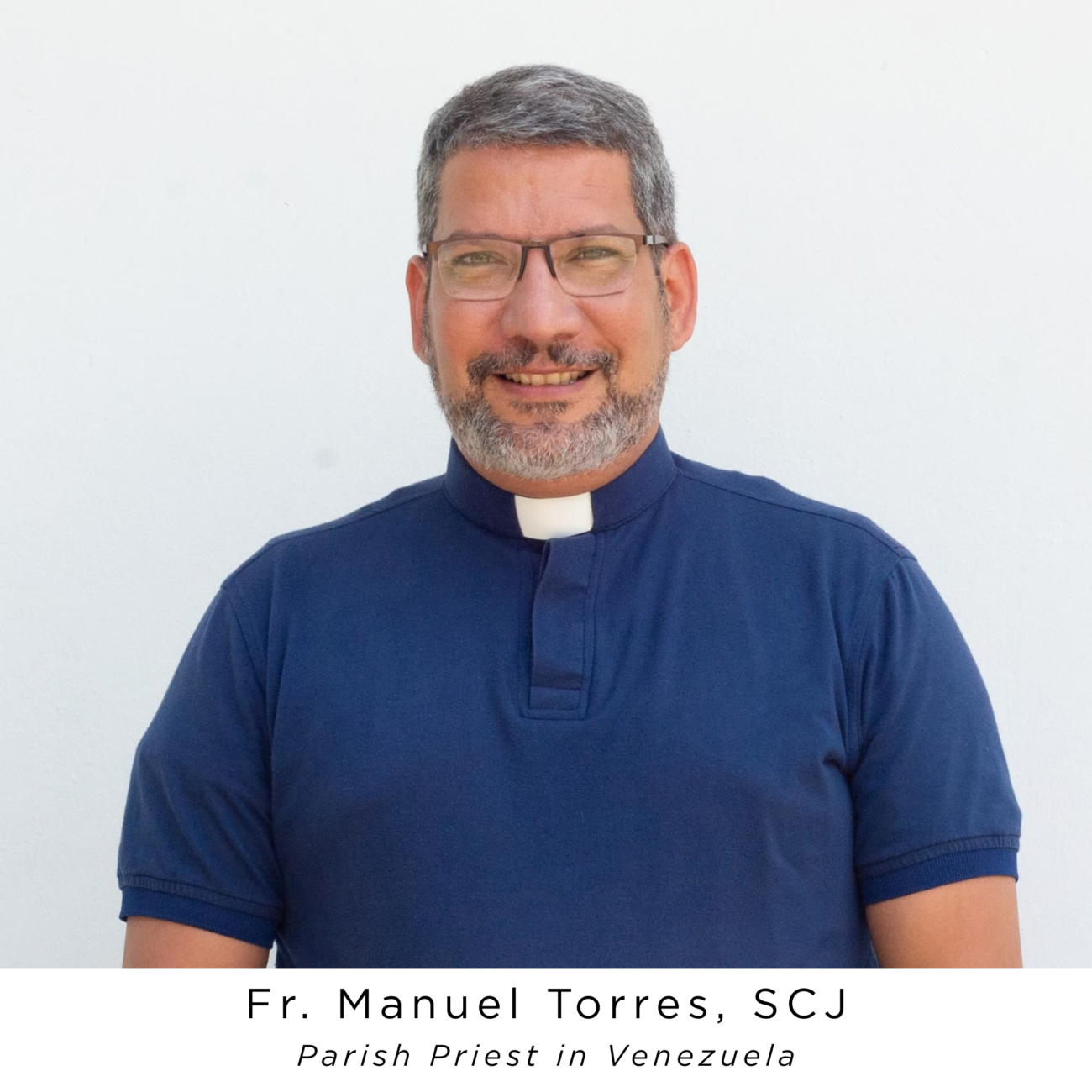 A personal testimony from Fr. Manuel Torres, SCJ, Parish Priest in Venezuela
Serving as a Dehonian Parish Priest is a relatively recent experience for me. After finishing my initial formation, I served the congregation at the Father Dehon Industrial Technical School for 15 years. That is why leading a parish, for me, means daily rediscovering that a parish is not a simple administrative structure, but a living community of communities where the Ecce Venio is embodied in the lives of our people. Our Constitution number 12 forcefully proclaims a fundamental certainty: “His way is our way.” For me, this brief phrase synthesizes the essence of SCJ parish life; it is the compass that reorients my steps every time I open the doors of the church or go out to meet the faithful in the Barrio (the outskirts and the heart of our parish community here in Caracas).
In the day-to-day life of the parish, embracing that His way is our way means learning to look, feel, and welcome with the same sentiments of the Heart of Jesus. Christ’s way was marked by absolute availability to the Father and compassionate closeness to the most vulnerable. As a parish priest, this way translates into very concrete gestures: being present and available in season and out of season; listening patiently to the pain of the elderly suffering the abandonment of loved ones who emigrated in search of a better life and forgot those left behind; providing a decent meal each week to those living on the streets, trapped by addiction and neglect; nurturing the hope of so many young people who have only known the reality of a country that, for them, has continually declined; and celebrating the sacraments not as isolated rites, but as the reparative self-giving of a God who embraces our fragility and sees our suffering.
The legacy of the Venerable Father Leo Dehon impels us not to remain locked inside our sacristies. The parish community constantly challenges us to go out of ourselves, even beyond our parish boundaries. In my own experience, the recent earthquakes that occurred in our country on June 24 were also a time of grace, when together with a large group from the parish community, we went out to help our brothers and sisters affected by that catastrophe with overwhelming generosity, holding nothing back and giving even more than what we had at home. We felt not only sent by Christ, but accompanied and driven by Him. His close presence is the secret strength that sustains us through daily fatigue and fills our service with joy.
Celebrating this Jubilee by exploring the Constitutions reminds us that oblations and reparation are not theoretical concepts, but pastoral life choices. May the Sacred Heart grant us the grace to continue joining our steps to His, making every Dehonian Parish a beacon of communion, consolation, and hope for today’s world.
Fraternally in the Heart of Jesus,
Fr. Manuel Torres, SCJ – Parish Priest