Religious life as a particular gift to bear witness to the supremacy of the Kingdom (Cst. 13)


The Superior General’s Introductory Letter for the Dehonian Jubilee (2024–2028) highlights that our celebration’s spiritual core rests on reflection upon Constitutions nn. 9–39. We are pleased to share the fifth reflection and testimony, centered on Constitution n. 13.
Reflection on Constitutions 13
Together with all our Christian brothers and sisters, we are led to follow in the footsteps of Christ, so as to attain holiness (cf. 1 Thess 4:7). – “For to this you have been called, because Christ also suffered for you, leaving you an example, so that you should follow in his steps” (1 Pet 2:21).
Rooted in our baptism and confirmation, our religious vocation is a particular gift, for the glory of God and to attest to the primacy of the Kingdom.
 The 15th General Chapter confirmed that our religious life is based on the theological life, understood as our relationship with God. The explicit reference to sacramental initiation shows us how deeply every Dehonian is part of a united spiritual community. Through baptismal grace and collaboration with the Holy Spirit in confirmation, every Dehonian is called to follow in the footsteps of Christ, discovering their own particular vocation in the world. Our vocation finds its root in holiness, to be understood as an ideal to be achieved within the context of the Dehonian experience of faith.
Grasping the concept of holiness might seem like an obvious and self-evident topic to many. It is important to remember that the context in which these topics are discussed can sometimes lead to significant changes in their interpretation. It is equally important to remember that holiness is a goal achieved through small but significant steps, following the example of Christ. It is precisely in this pursuit that we find holiness à la Dehonienne, understood as a reparative response capable of joining in the establishment of the Kingdom of the Sacred Heart in human hearts and in societies, as interpreted by Father Albert Bourgeois.
Indeed, we join this community with the intention of fulfilling that broader vocation which finds its root in the fifth chapter of the Dogmatic Constitution on the Church, Lumen Gentium. Holiness is no longer an exclusive requirement reserved for a select few, but is increasingly a part of our daily way of living. This gift must therefore be viewed from a Christological perspective that places the Kingdom of Jesus as a reality flourishing from our collaboration with His grace. We are all called to become prophets of love and servants of reconciliation, sent by the Master to the people. Our personal holiness is not merely an added ornament, but the way in which we fully realize our vocation to discipleship.
This helps us understand how important our contribution is and how much we are called to foster the growth of this Kingdom, especially in our own hearts. Our Dehonian charism is not merely a project to be propagated, but a way of life that I myself must put into practice with commitment and dedication. Indeed, Father Dehon asked us not only to promote devotion to the Sacred Heart, but also to live it with dedication in oblation, reparation, and adoration. Only in this way can we radiate it to all the people entrusted to our pastoral care. Our Christian, consecrated, and Dehonian life leads us to fix our gaze on Christ, who enables us to know and believe in His love, so that He may reign in us and through us.
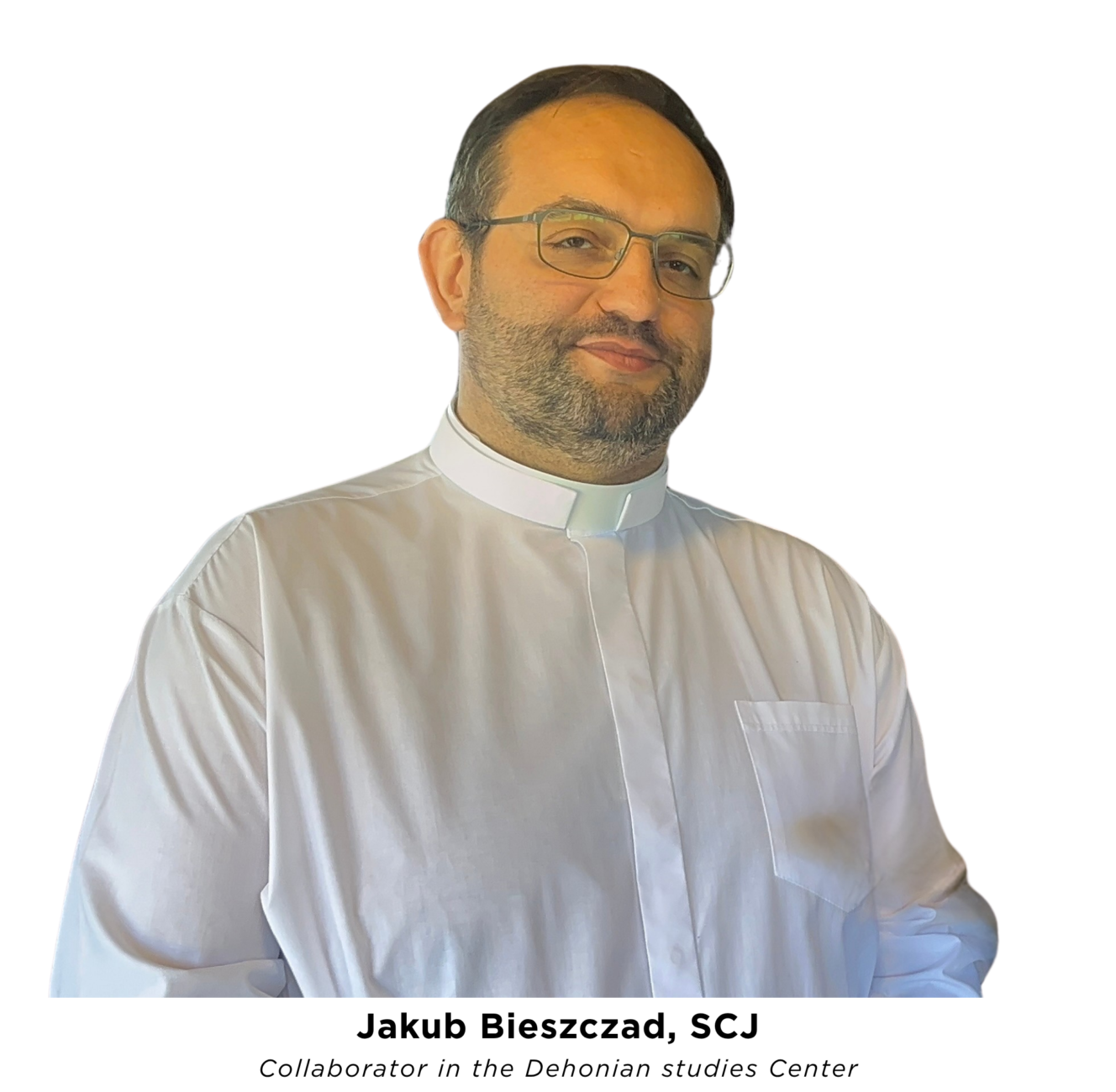
(Jakub Bieszczad, SCJ)
Testimony on Constitutions 13
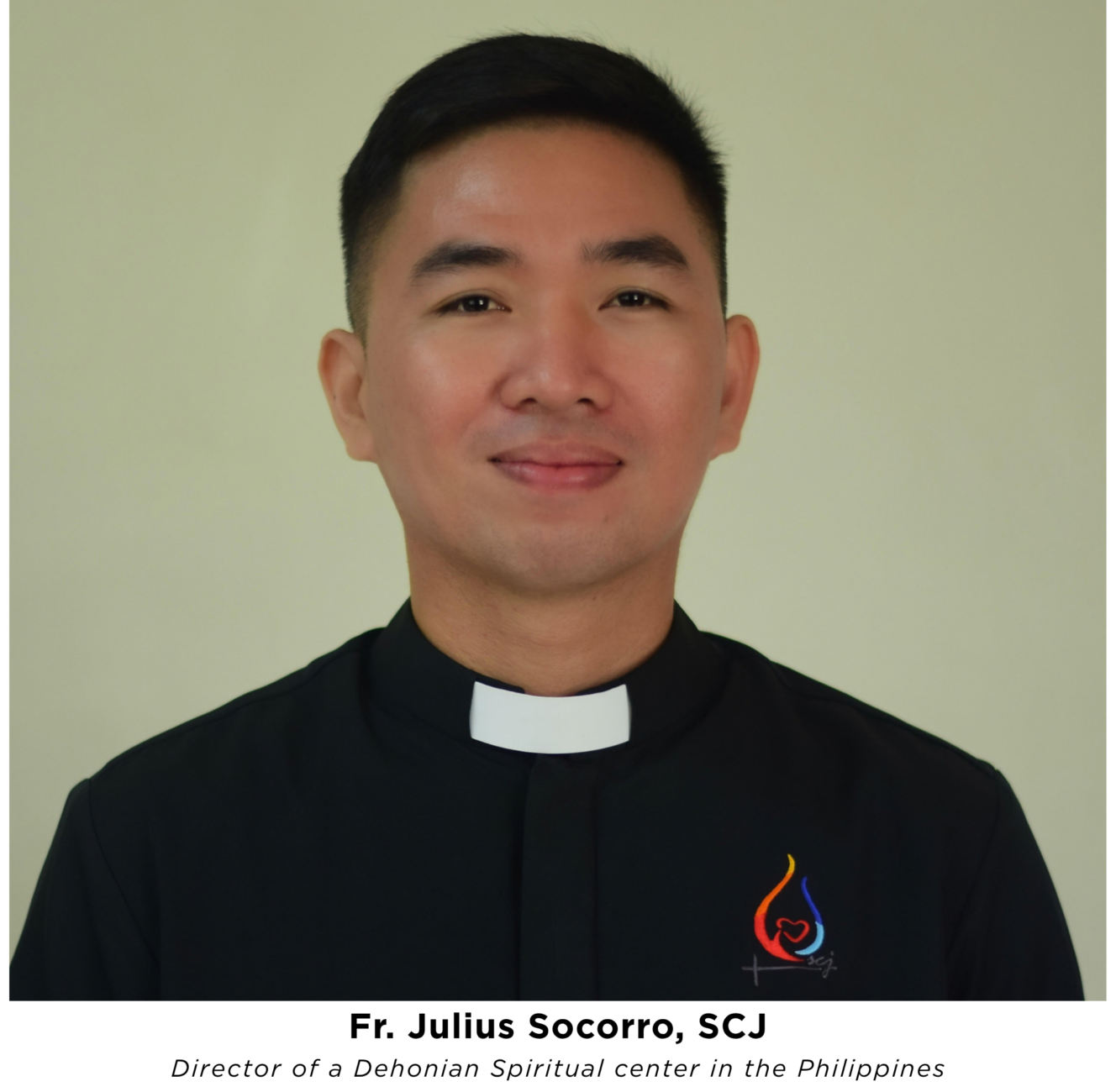 A personal testimony from Fr. Julius Socorro, SCJ, Director of the Dehonian Spiritual center in the Philippines.
During one of the three-day retreats I accompanied, a retreatant shared a thought that remained with me: “It is true that we die once; but it is not true that we live only once, because we live every day.” As I listened, I wondered whether there is something more frightening than death itself, the possibility of reaching its end without having discovered why we were given life. A purposeful life, I am slowly realizing, is not simply about what we build, achieve, or leave behind. It has more to do with becoming what God has called us to be.
This becomes particularly meaningful when I think of the people who come to the spiritual center. In this relatively short time of being entrusted with this ministry, I have encountered people, especially the young, who carry a certain emptiness. There is so much around them: technology, information, opportunities, relationships, and plans for the future, and yet something can still feel missing. Perhaps this emptiness is not merely a problem to be solved. It can also become a space where God is waiting to be discovered. Beneath the noise, there is a longing for meaning, for something deeper than success, recognition, or comfort.
This makes me wonder about our place as religious. Perhaps people do not always need us to explain vocation. Before they hear what we say, they may need to encounter someone who is actually living it. At the spiritual center, people encounter not only our programs and our words. They encounter us: how we pray, listen, forgive, serve, carry our responsibilities, and respond to the unexpected. They encounter our life.
This is where the authenticity of religious life becomes important. A life lived with Christ cannot remain completely hidden. When Christ becomes the center, something of Him begins to appear: in patience, availability, forgiveness, fidelity, and the courage to remain when it would be easier to leave. These ordinary expressions of faith may become another person’s first glimpse of the mystery of God.
This is both beautiful and frightening. Beautiful, because our lives can become an opening through which another person may glimpse something beyond himself. Frightening, because religious life cannot simply be performed. We can perform ministry, responsibilities, and even our religious identity. However, there is a difference between performing religious life and living from the relationship that gave birth to it.
This is why I return to the conviction that our vows are first and foremost a gift. We did not build our vocation or attain it by our own strength. We received it. And because it is a gift, it must also be nurtured. Without closeness to the Giver, the gift can slowly become an obligation; the relationship can become a role, prayer an activity, ministry a function, and witness a performance.
Perhaps this is one of the things I fear most, not simply failing in ministry, but doing many things for God while slowly becoming distant from God Himself.
The people who come to the spiritual center often bring their questions, wounds, disappointments, hopes, and silence. Their presence makes me ask a question that I cannot easily escape: What kind of religious person are they meeting in me? Not only what do I teach them or tell them, but what does my life say?
I do not always know the answer. Perhaps I should not pretend that I do. I am still being formed. I am still learning to return to Christ and to allow Him to shape my heart.
Maybe this is what it means to witness to the primacy of the Kingdom: not necessarily to do extraordinary things, but to live in such a way that our life points beyond itself, to love because we have first been loved, to serve because our life has already been given, and to remain faithful even when no one notices.
Our life becomes meaningful when it becomes a gift. And perhaps religious life becomes a true testimony to the Kingdom when, without saying much, our life itself quietly reveals that the Kingdom is worth living for.
(Fr. Julius Socorro, SCJ)